Blog

  • Bydd cyfryngau cymdeithasol (ffynhonnell agored) yn arbed ein democratiaeth

    Mewn darn barn ym mhapur newydd y Guardian ddoe, mae Carole Cadwalladr yn disgrifio sut mai Facebook yw’r firws sydd wedi galluogi trychinebau Brexit, ac esgyniad y celweddog, Mr Trump, i’r Tŷ Gwyn.

    Mae Facebook yn caniatáu i gelwydd ledaenu bron heb ei wirio. Mae’n caniatáu i’r bobl hynny sydd â’r mwyaf o arian a lleiaf o ysgrythurau ledaenu anwireddau i’r rhai mwyaf tueddol o ddioddef. Ac mae’n caniatáu hyn heb unrhyw obaith o ddwyn unigolion neu sefydliadau i gyfrif.

    Er bod Facebook, Twitter, Instagram a llwyfannau cyfryngau cymdeithasol eraill wedi galluogi cysylltiad, sgwrs a syniadau a rennir; maent hefyd wedi creu byd digidol chwerw, ymrannol, polariaidd lle mae gwerth cyfranddaliwr yn cael ei wella fwyaf trwy dynnu sylw at rannu a lleihau cytgord. Mae meddyliau tawel, rhesymegol yn cael eu hidlo allan gan algorithmau sydd wedi’u cynllunio i wneud y mwyaf o gliciau, ail-drydariadau a hoff bethau. Cyfrol yn frenin.

    Mae llawer o bobl eisiau gwneud gwahaniaeth ond nid ydyn nhw’n gwybod sut. Ond mae gwrthwenwyn i firws camwybodaeth a chasineb. Cyfryngau cymdeithasol ffynhonnell agored yw’r gwrthwenwyn hwnnw, ac mae eisoes yn lledu ar gyrion y bydysawd ar-lein.

    Cyfryngau cymdeithasol ffynhonnell agored

    Nid yw cyfryngau cymdeithasol ffynhonnell agored yn caniatáu hysbysebu. Nid yw’n gwerthu data. Mae’n gwahardd lleferydd casineb ac anoddefgarwch*. Ac mae’n cael ei gymedroli gan ddefnyddwyr, heb adnoddau ar gais cewri technoleg fyd-eang.

    Yn fwy pryderus i’r perigloriaid, nid yw gwelyau poeth arloesi bellach yn y mega-gorfforaethau gyda’u timau o filoedd yn swyddfeydd ac ystafelloedd bwrdd America (yn bennaf). Maent yn yr hyn sy’n cyfateb i ffynhonnell agored, gyda chod ar gael am ddim i filoedd o gefnogwyr a gwirfoddolwyr ledled y byd ei adeiladu a’i wella.

    O safbwynt Deddf Cenedlaethau’r Dyfodol Cymru, mae unrhyw un sy’n defnyddio, hyrwyddo neu gefnogi’r llwyfannau ffynhonnell agored hyn yn cefnogi nod Cymru sy’n Gyfrifol yn fyd-eang. O safbwynt byd-eang, mae’r un defnyddiwr neu gefnogwr hwnnw’n cynyddu’r swm o wybodaeth ddynol sydd ar gael yn rhwydd.

    Un enghraifft glir o’r arloesedd hwn yw’r ffederasiwn rhwng llwyfannau ffynhonnell agored (a elwir hefyd yn Fediverse). Ffederasiwn yw’r gallu i gysylltu gwahanol lwyfannau cyfryngau cymdeithasol, fel bod swyddi a diweddariadau yn dod yn weladwy i’r ddwy ochr.

    Mae hyn yn golygu, os ydych chi’n postio llun ar Pixelfed (fersiwn foesegol o Instagram), mae’n ymddangos yn eich porthiant ar Mastodon (fersiwn foesegol o Twitter). Yn yr un modd gall gwefannau, blogiau a diweddariadau ar gyfwerth moesegol bron pob platfform ‘gwyliadwriaeth cyfalafiaeth’ y gallwch chi feddwl amdano groes-bostio i’w gilydd, gan alluogi sgyrsiau a diweddariadau llawer symlach.

    Beth yw’r anfanteision (a’r fanteision)?

    Gadewch inni ddelio â’r eliffant yn yr ystafell; anfantais fawr y Fediverse ffynhonnell agored newydd yw bod niferoedd y defnyddwyr yn llawer, llawer is nag ar gyfer y llwyfannau sefydledig.

    Go brin fod hyn yn syndod; mae yna ben blaen o bymtheng mlynedd i lawer o’r cewri technoleg. Ac mae’r wyddoniaeth y tu ôl i’r cyfryngau cymdeithasol yn golygu bod yna effaith crynhoad; unwaith y bydd y rhan fwyaf o’ch ffrindiau wedi ymgysylltu ar blatfform, mae’n cymryd ymdrech sylweddol i’w gadael ar ôl a dechrau rhywbeth newydd.

    I mi yn bersonol roedd yn golygu (yn bennaf) gadael fy nghyfrif Twitter o filoedd o ddilynwyr, a dechrau cyfrif Mastodon newydd ffres ar toot.wales, un o lawer o achosion tebyg i ‘locality’ ledled y byd.

    Fe wnes i ‘golli allan’ ar unwaith ar y llif ar unwaith o ddiweddariadau gan fy ffrindiau a chydweithwyr niferus, ac ar y ddadl fras-a-dillad (yr hyn sy’n pasio amdani) yno. Mae’n debygol y bydd effaith ar fy ngallu i hyrwyddo fy musnes newydd, Afallen, trwy’r rhwydwaith hwnnw hefyd.

    Fodd bynnag, yr hyn a ddarganfyddais yw cymuned newydd o ffrindiau a chydweithwyr ar-lein. Rwyf wedi gweld casineb neu fwlio bron yn sero. Ac rydw i wedi bod yn falch iawn o ddefnyddio llwyfannau nad ydyn nhw’n cynaeafu fy data personol er mwyn eu gwerthu i gwmnïau a allai – mewn llawer o achosion – osod elw uwchlaw budd y cyhoedd.

    Y gwir yw bod cymuned y defnyddwyr ym Mastodon (a’r llwyfannau eraill) yn tyfu’n gyson – gweler yr enghraifft isod am weithgaredd ar enghraifft Mastodon toot.wales. Ar ryw bwynt tipio – rwy’n argyhoeddedig – bydd y twf yn dechrau dod yn esbonyddol, ac yna bydd y defnyddwyr a ddaeth yn weithredol gyntaf yn gweld y buddion mwyaf.
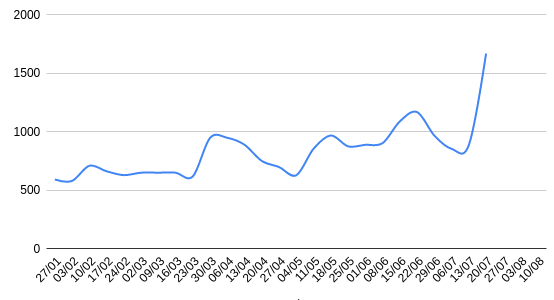
    Gweithgaredd wythnosol ar toot.wales

    Ond daw’r budd mwyaf oll pan fydd pobl yn dechrau gadael llwyfannau’r cewri technoleg en masse, gan leihau eu dylanwad fel ceidwaid dadl ar-lein a rhannu gwybodaeth, a chyfrannu at fyd mwy caredig, ysgafnach a mwy meddylgar o ddisgwrs gyhoeddus. .

    Gwybodaeth bellach
    Os oes gennych ddiddordeb mewn darganfod mwy am y dewisiadau amgen moesegol, ymwybodol o breifatrwydd i’r llwyfannau cyfryngau cymdeithasol prif ffrwd, ewch i switching.software.

    *Mae bron pob ‘achos’ o gyfryngau cymdeithasol ffynhonnell agored yn gwahardd casineb ac anoddefgarwch. Y rhai nad ydynt yn gyffredinol yn cael eu blocio, felly mae’r casineb wedi’i gyfyngu i gyfran fach o’r Fediverse


  • Open source social media will save our democracy

    Open source social media will save our democracy

    Join Mastodon homepage

    Open source social media will save our democracy

    In an opinion piece in yesterday’s Guardian newspaper, Carole Cadwalladr describes how Facebook is the virus that has enabled the catastrophes of both Brexit, and the ascension of Mr. Trump to the White House.

    Facebook allows lies to spread virtually unchecked. It permits those people with the most money and least scruples to disseminate falsehoods to those most susceptible. And it allows this with no prospect of holding individuals or organisations to account.

    Whilst Facebook, Twitter, Instagram and other social media platforms have enabled a blossoming of connection, conversation and shared ideas; they have also created a bitter, divisive, polarised digital world where shareholder value is enhanced most by highlighting division and minimising harmony. Quiet, reasoned thoughts are filtered out by algorithms designed to maximise clicks, retweets and likes. Volume is king.

    Many people want to make a difference but they don’t know how. But there is an antidote to the virus of misinformation and hatred. That antidote is open source social media, and it’s already spreading at the fringes of the online universe.

    Open source social media

    Open source social media doesn’t permit advertising. It doesn’t sell data. It prohibits hate speech and intolerance*. And it’s moderated by users, not resourced at the behest of global tech giants. 

    More worryingly for the incumbents, the hotbeds of innovation are no longer in the mega-corporations with their teams of thousands in the offices and boardrooms of (mostly) America. They are in the open source equivalents, with code freely available for thousands of supporters and volunteers across the globe to build and improve. 

    From the perspective of Wales’ Future Generations Act, anybody using, promoting or supporting these open source platforms is supporting the goal of a Globally Responsible Wales. From a worldwide perspective, that same user or supporter is increasing the freely-accessible sum of human knowledge. 

    One clear example of this innovation is the federation between open source platforms (also known as the Fediverse). Federation is the ability to connect different social media platforms, so that posts and updates become mutually visible.

    This means that if you post a photo on Pixelfed (ethical version of Instagram), it pops up in your feed on Mastodon (ethical version of Twitter). Likewise websites, blogs and updates on the ethical equivalent of pretty much every ‘surveillance capitalism’ platform you can think of can cross-post to each other, enabling much more streamlined conversations and updates.

    What are the downsides (and upsides)?

    Let’s deal with the elephant in the room; the big downside of the new open source Fediverse is that user numbers are far, far lower than for the established platforms.

    This is hardly surprising; there’s a headstart of fifteen years or so for many of the tech giants. And the science behind social media means that there’s an agglomeration effect; once most of your friends are engaged on a platform, it takes a significant effort to leave them behind and start something new.

    For me personally it meant (mostly) leaving my Twitter account of several thousand followers, and starting a fresh new Mastodon account on toot.wales, one of many ‘locality’ type instances across the world. 

    I instantly ‘lost out’ on the instantaneous stream of updates from my many friends and colleagues, and on the rough-and-tumble of (what passes for) debate there. There’s likely an impact on my ability to promote my new business, Afallen, through that network, too. 

    However, what I have found is a new community of online friends and collaborators. I’ve witnessed almost zero hatred or bullying. And I’ve relished using platforms which don’t harvest my personal data in order to sell them to companies who may – in many cases – place profit above the public good.

    The truth is that the community of users in Mastodon (and the other platforms) is growing steadily – see the example below for activity on toot.wales. At some tipping point – I’m convinced – the growth will start to become exponential, and then the users who became active first will see the biggest benefits.

    Weekly interactions on the toot.wales platform

    But the biggest benefit of all will come when people start to leave the platforms of the tech giants en masse, lessening their influence as the custodians of online debate and information-sharing, and contributing to a kinder, gentler and more thoughtful world of public discourse.

    Further information

    If you’re interested in finding out more about the ethical, privacy-conscious alternatives to the mainstream social media platforms, head to switching.software.

    *Almost all ‘instances’ of open source social media ban hate and intolerance. Those that don’t are generally blocked, so the hatred is restricted to a small portion of the Fediverse

    One response to “Open source social media will save our democracy”

    1. […] Open source social media will save our democracy […]

  • Own a tiny piece of a wind turbine

    Own a tiny piece of a wind turbine

    I’ve had the privilege and pleasure of working for the renewable energy sector for more than fifteen years – much of that supporting onshore wind.

    Onshore wind is the cheapest form of electricity, and can be deployed relatively quickly. It is the perfect complement to solar, typically increasing its output during the winter months. And I think that wind turbines themselves are elegant, beautiful and symbolic of our move away from fossil fuel and towards a better, brighter future.

    In the summer of 2019 I was asked if I wanted to help support a new kind of onshore wind project. The concept, produced by Ripple Energy, is for co-operatively owned wind projects to produce electricity, and then sell it as close to market price as possible, with the value captured for members of the co-op.

    I was intrigued, and delighted to be asked to lend my support, and so I agreed to Chair the Board of a new pilot wind project cooperative.

    Fast forward to July 2020 (and me stepping down from Chair due to Covid-19 and furlough!), and after a huge amount of hard work by Simon Peltenburg, Sarah Merrick and my fellow Board members, the project is now live. Yes, you can buy your own tiny bit of a wind farm, and – as near as possible – have a direct link between the electricity you use and the electricity you generate, straight from a wind turbine.

    The turbine is based in the Rhondda in south Wales, and will directly benefit local residents through a local impact fund. It will directly benefit the members of the cooperative by reducing their electricity bills – as long as there’s a differential between the cost of building and running the wind turbine, compared to the wholesale cost of electricity. All the models of predicted electricity prices point to this being the case.

    There’s a ‘cost calculator‘ to help you find out how much a share in the coop would cost, and the potential savings you could make.

    No alt text provided for this image

    Supporting the sector

    Many people, only too aware of the impact that our everyday activities are having on climate, are keen to try to make more direct change to how we live our lives. This project, and the Ripple concept more generally, do exactly that.

    I am really excited by the prospect of tens or hundreds of these projects, growing in scale across the UK and beyond, harnessing the power of individuals and (in due course) businesses to directly put their money where the science tells us we need to.

    As usual, there are a whole bunch of caveats with this sort of ‘investment’ – available from the share document, which also features me(!) as a Board member.

    No alt text provided for this image

    You’ll need to change supplier to Octopus Energy for a while (sorry Bulb, you were great but I understand that in future there will be a range of suppliers we can switch to) – but in my case that was handled very straightforwardly.

    Please head to the website, take a look around, and if you think this is a project worth supporting, join me and hundreds of others in making it a reality.

  • A long road: 2021 targets for CO2 emissions in the EU

    A long road: 2021 targets for CO2 emissions in the EU

    The European Environment Agency (EEA), my former employer, has published the latest in the series of reports about CO2 emissions for new vans and cars.

    As shown in the graph below, there is a big mismatch between the trendline and the 2021 target which requires a very substantial drop in average emissions. Perhaps the manufacturers are banking on the continuing ‘march’ of the low-emission vehicle?

    A recent upturn in the average values reflects an increasing predilection for SUVs for EU citizens. This is a shame from the perspective of climate policy; they are generally heavier and less efficient.

    The shockwaves of continue to reverberate, with another fall in diesel registrations – 9% decrease in the last year to 36% of the total market – bringing the total decline to 19% since the peak year of 2011.

    The glimmer of hope is that the market share for hybrid and Battery Electric Vehicles (BEV) has increased from 1% to 2% from 2016 to 2018. Continued exponential growth may yet bring transport emissions on track.

    Real-world testing

    The wheels of regulation turn slowly. Although it was common knowledge that the manufacturers ‘gamed’ the energy efficiency tests, nothing could be done about it due to the power of the manufacturer lobby in Brussels.

    Dieselgate finally tipped the power balance in favour of the regulators, and ‘real world’ conditions will be required from 2021.

    The UK’s place

    With the UK having left the EU, and looking as though it will ‘crash out’ with no deal, it seems likely that this will be the last time that ‘our’ statistics are included as part of the EEA’s work.

    Whether this leads to a reduction in CO2 requirements in the UK is unclear. The UK Government appears paralysed between wanting to ‘act’ on CO2, and grimly understanding that there will be horrific economic consequences from leaving the EU without a deal at the end of the year. Maybe they will want to toss regulations out of the window in order to ‘cut costs’ (which in reality will just shift the burden to the population at large and reduce costs to the polluter)? Or maybe Michael Gove was telling the truth when he challenged the EU to an environmental race.

    Words are cheap. Action has meaning. This Government has so far shown a distinct preference for the former.

    Wales’ place?

    As usual, Wales has very little say in what happens to this line of regulation in future, which is a UK matter. If the UK Government decide that they want to (indirectly) reward polluters by weakening the environmental requirements for new vehicles, there is nothing that the Welsh Government can do to stop it, despite there being a direct inherent contradiction with both the Act for the Well-being of Future Generations, and the constitutional obligation to sustainability.

    So, as usual, we’ll just have to cross our fingers and suck up whatever’s decided the other end of the M4.

  • ‘Hwyl fawr’ Twitter

    ‘Hwyl fawr’ Twitter

    I’ve long been intrigued by the interplay between the dark money that fuelled Brexit (amongst other nominally democratic events), and the use of social media to persuade and to influence.

    I’m surely not the only person who feels intense disquiet about the use of money to spread lies and misinformation – and the seeming impunity of campaigns which willfully spread those lies to any kind of meaningful sanction.

    I’ve come to the conclusion that the amoral position taken by the surveillance capitalism giants – such as Facebook (and by extension, Instagram), and Twitter – has led inexorably to an erosion of the polity in the UK and elsewhere.

    I have taken to heart the maxim “be the change you want to see in the world” and have decided to significantly reduce my activity on Twitter. I have already effectively closed my Instagram account, and I closed my Facebook account in 2008.

    My decision to reduce my activity on Twitter doesn’t come without cost. It reduces my influence within the networks I spent many years building up. It means that I’m less well informed about many of the things that I care about.

    But I’m happy to remove my support for a commercial giant which constantly erodes the protections it offers for user data (this goes double now that we’re leaving the GDPR protection of the European Union). I’ve come to the understanding that every tweet I make, every comment I reply to, every link I post, is adding value to a company which has proved agnostic to the notion of democratic norms.

    And I’m simultaneously becoming far more comfortable with a platform which is proving to be a viable alternative, albeit with much more growth needed before it comes close to the social functionality provided by Twitter. That site is toot.wales, and it’s an ‘instance’ of the open-source Mastodon platform.

    I wrote about Mastodon a while back for the Institute of Welsh Affairs. TL;DR – it’s a site which duplicates much of the functionality of Twitter, but doesn’t allow advertising, doesn’t harvest your data and has effectively banned sexism, racism and hate speech.

    I still have an account on Twitter, and I’ll use it to message people, and to promote my toots on Mastodon. But I reject the notion that I’m a ‘monetizable daily active user‘ with my data at the service of anyone with a chequebook. My ultimate goal is to stop using Twitter altogether, to fully embrace an open, free and respectful way of interacting with others.

  • Something’s happening in the Fediverse…

    Something’s happening in the Fediverse…

    6 April 2020

    I’ve been using the Mastodon micro-blogging platform for a while now – increasingly choosing not to use or post on Twitter and committing myself to a democracy-friendly path.

    I’ve become used to ‘meeting’ interesting people way outside my normal e-contact groups, and I have definitely reduced contact with the people I would normally engage with.

    I’ve also become used to interacting on a platform which has far (far!) fewer users than Twitter. I’ve made the assumption that there’s a short and medium-term cost to my own influence, and potentially to the commercial success of Afallen, by turning my back on one of the most visible and active micro-blogging platforms on the planet, because I believe that it’s the ethical thing to do.

    But….something strange is happening in the Fediverse. Mastodon has suddenly seen a huge surge in registrations.

    Probably the largest instance (if you need a primer on the basics, this might help) of Mastodon is Mastodon.Social. There’s a Mastodon account which tracks the number of registered users on that instance.

    For months, the weekly number of new registered users was around 2,000 or so see the stats from 19 March, for example. And the total for the last week? 14,550.

    graph of new registered users

    I’m prepared for any number of explanations for this, ranging from a sudden raising of awareness about the platform in a particular country or language; to an awareness from spam-bots that it represents a new way to reach an audience.

    However there’s a tiny bit of me that’s hopeful that it represents a real, meaningful increase in awareness and activity for the platform. The science behind social networks demonstrates that size begets size. So any increase in ‘real’ users on Mastodon is to be celebrated.

    I’ve posed the question to the Fediverse about the reason for the surge, so it may turn out to be a statistical blip, or a bunch of bots. But for the time being…I’m dreaming of a step change in awareness about this amazing, hate-free, democracy-supporting platform.

  • Supporting the vulnerable: Challenge 2050

    Supporting the vulnerable: Challenge 2050

    This blog post was written for Cymorth Cymru by David Clubb, ahead of him holding a presentation and workshop on climate change at their annual conference on March 26, 2020.

    How about this for irony; those who have contributed least to climate change, stand to suffer the greatest (1). This is as true globally as it is in Wales. 

    The countries which prop up the global per-capita greenhouse gas emissions table (2) include the Democratic Republic of Congo, Chad, Burundi, Uganda and Somalia. Africa is notable for its exceedingly modest contribution to human-induced climate change, yet stands to suffer greatly from changing weather patterns (3), not least increased average temperatures and changes in precipitation which will increase the challenge of desertification across much of the equatorial region.

    As globally, so in the UK. The lowest decile of income produces ⅓ of the greenhouse gas emissions of the top decile (4). Yet those with the lowest incomes typically have much lower resilience to events  which will be far more likely to occur as a result of climate change, such as flooding, wildfires and heatwaves.

    So when it comes to mitigating climate change, I refuse to point the finger at those who have done least to cause the problem. Yes, everyone can, and should, play a part in minimising their own carbon impacts. But the heaviest burden should fall on those with the greatest capacity to bear the cost – and on those who have contributed the greatest to the UK’s carbon emissions.

    Instead, the focus for those of us with personal and professional interests in supporting the most vulnerable in our society should be on how we can adapt our services in order that we are as well equipped as possible to respond to the inevitable challenges and crises that will arise more frequently in a future defined by a breakdown in climate as we have been privileged to know it.

    The Future Generations Act (5) provides us with a useful framework to consider our operations, with both the Well-being Goals and Ways of Working (6) requiring us to take different decisions and produce improved outcomes as a consequence.

    To take one example, the ways of working require a long-term, preventative approach. If we combine that approach with the Goals of prosperity and resilience, we can see that they mandate a careful assessment of the risk of flooding to property and other assets over a long period of time – say 2050. With coastal flooding risk increasing significantly (7), it would seem prudent for those providing services to the vulnerable to assess which of their assets will be in an annual flood risk area by 2050, and to make enquiries to Natural Resources Wales, the local authorities and to Welsh Government about any planned improvements to coastal flood defences.

    Such service providers would almost certainly benefit from also undertaking an assessment of fluvial and surface water flood risk – activity thrown into sharp relief from the recent devastating floods in the valleys, and more widely across south, mid and north Wales.

    And it’s not just the assets of support service organisations that should be considered; what happens if major transport infrastructure routes are disrupted or destroyed? How can support organisations respond to what will inevitably be a large rise in demand for their services in response to an increasingly severe flood risk? 

    Yet within the challenges that face the sector lie opportunities to make changes which will provide multiple benefits. Whilst warmer summers will undoubtedly lead to significant problems for many of our most vulnerable, the opportunity to pre-empt the worst impacts by using green infrastructure to provide natural shade and cooling will simultaneously help reduce rainwater run-off, improve mental and physical well-being, and improve habitats in and around property assets.

    The organisations which are most likely to thrive in conditions of increasing unpredictability will be those which have adopted a strategic approach to embedding resilience and subsidiarity. So the big questions to be answered by the different levels of governance within organisations which provide services for the vulnerable are:

    • Does the Board have the right strategic approach to preparing staff, property and other for a 2050 which will see much increased disruption from climate-influenced natural events?
    • Does senior management have the right tools to embed a culture of resilience and subsidiarity within the organisation?
    • Do front-line delivery staff have the right training, support and autonomy to enable them to react with confidence and good judgement in situations outside ‘normal’ work conditions

    We certainly can’t stop our climate from changing. But we can, and should, think carefully and strategically about how our organisations can play a significant role in making the transition to our new climate reality more sustainable and manageable. We owe no less to those who will depend upon us.

    1.     Extreme Carbon Inequality [Internet]. Oxfam International. 2015 [cited 2020 Mar 7].

    2.     List of countries by carbon dioxide emissions per capita. In: Wikipedia [Internet]. 2020 [cited 2020 Mar 7].

    3.     Girvetz E, Ramirez-Villegas J, Claessens L, Lamanna C, Navarro-Racines C, Nowak A, et al. Future Climate Projections in Africa: Where Are We Headed?: Investigating the Business of a Productive, Resilient and Low Emission Future. In 2019. p. 15–27.

    4.     The distribution of UK household CO2 emissions [Internet]. [cited 2020 Mar 7].

    5.     Well-Being of Future Generations (Wales) Act ’ [Internet]. 2015 anaw 2 Apr 29, 2015 p. 56.

    6.     Well-Being of Future Generations – The Essentials [Internet]. Welsh Government; 2015 [cited 2018 Oct 28].

    7.     Wales underwater? – Afallen [Internet]. [cited 2020 Mar 7].

  • Cefnogi’r rhai sy’n agored i niwed: Her 2050

    Cefnogi’r rhai sy’n agored i niwed: Her 2050

    Ysgrifennwyd y blogbost hwn ar gyfer Cymorth Cymru gan David Clubb, cyn iddo gynnal cyflwyniad a gweithdy ar newid yn yr hinsawdd yn eu cynhadledd flynyddol ar Fawrth 26, 2020.

    Beth am hyn ar gyfer eironi; y rhai sydd wedi cyfrannu leiaf at newid yn yr hinsawdd, sy’n dioddef fwyaf (1). Mae hyn yr un mor wir yn fyd-eang ag y mae yng Nghymru.

    Mae’r gwledydd sy’n cefnogi’r tabl allyriadau nwyon tŷ gwydr y pen (2) yn cynnwys Gweriniaeth Ddemocrataidd y Congo, Chad, Burundi, Uganda a Somalia. Mae Affrica yn nodedig am ei chyfraniad hynod gymedrol at newid hinsawdd a achosir gan bobl, ond eto mae’n dioddef yn fawr o ganlyniad i batrymau tywydd newidiol (3), yn anad dim y tymereddau cyfartalog uwch a newidiadau mewn dyodiad a fydd yn cynyddu her anialwch ar draws llawer o’r rhanbarth cyhydeddol. .

    Fel yn fyd-eang, felly yn y DU. Mae’r degradd isaf o incwm yn cynhyrchu ⅓ o allyriadau nwyon tŷ gwydr y degradd uchaf (4). Ac eto, yn nodweddiadol mae gan y rhai sydd â’r incwm isaf wytnwch llawer is i ddigwyddiadau a fydd yn llawer mwy tebygol o ddigwydd o ganlyniad i newid yn yr hinsawdd, fel llifogydd, tanau gwyllt a thonnau gwres.

    Felly, o ran lliniaru newid yn yr hinsawdd, rwy’n gwrthod pwyntio’r bys at y rhai sydd wedi gwneud leiaf i achosi’r broblem. Oes, gall, a dylai pawb chwarae rhan wrth leihau eu heffeithiau carbon eu hunain. Ond dylai’r baich trymaf ddisgyn ar y rhai sydd â’r gallu mwyaf i ysgwyddo’r gost – ac ar y rhai sydd wedi cyfrannu fwyaf at allyriadau carbon y DU.

    Yn lle, dylai’r ffocws i’r rhai ohonom sydd â diddordebau personol a phroffesiynol wrth gefnogi’r rhai mwyaf agored i niwed yn ein cymdeithas fod ar sut y gallwn addasu ein gwasanaethau er mwyn i ni gael yr offer cystal â phosibl i ymateb i’r heriau a’r argyfyngau anochel a fydd. codi’n amlach mewn dyfodol a ddiffinnir gan chwalfa yn yr hinsawdd gan ein bod wedi cael y fraint o’i wybod.

    Mae Deddf Cenedlaethau’r Dyfodol (5) yn darparu fframwaith defnyddiol inni ystyried ein gweithrediadau, gyda’r Nodau Llesiant a’r Ffyrdd o Weithio (6) yn ei gwneud yn ofynnol i ni wneud gwahanol benderfyniadau a chynhyrchu canlyniadau gwell o ganlyniad.

    I gymryd un enghraifft, mae’r ffyrdd o weithio yn gofyn am ddull ataliol hirdymor. Os ydym yn cyfuno’r dull hwnnw â’r Nodau ffyniant a gwytnwch, gallwn weld eu bod yn mandadu asesiad gofalus o’r risg o lifogydd i eiddo ac asedau eraill dros gyfnod hir – dyweder 2050. Gyda risg llifogydd arfordirol yn cynyddu’n sylweddol (7 ), byddai’n ymddangos yn ddoeth i’r rhai sy’n darparu gwasanaethau i’r rhai sy’n agored i niwed asesu pa rai o’u hasedau fydd mewn ardal risg llifogydd flynyddol erbyn 2050, a gwneud ymholiadau i Adnoddau Naturiol Cymru, yr awdurdodau lleol ac i Lywodraeth Cymru am unrhyw welliannau a gynlluniwyd. i amddiffynfeydd llifogydd arfordirol.

    Byddai darparwyr gwasanaeth o’r fath bron yn sicr yn elwa o hefyd gynnal asesiad o risg llifogydd dŵr afonol a dŵr wyneb – gweithgaredd wedi’i daflu i ryddhad sydyn o’r llifogydd dinistriol diweddar yn y cymoedd, ac yn ehangach ar draws de, canol a gogledd Cymru.

    Ac nid asedau sefydliadau gwasanaeth cymorth yn unig y dylid eu hystyried; beth fydd yn digwydd os amherir neu ddinistrir prif lwybrau seilwaith trafnidiaeth? Sut y gall sefydliadau cefnogi ymateb i’r hyn a fydd yn anochel yn gynnydd mawr yn y galw am eu gwasanaethau mewn ymateb i risg llifogydd fwyfwy difrifol?

    Ac eto o fewn yr heriau sy’n wynebu’r sector mae cyfleoedd i wneud newidiadau a fydd yn darparu nifer o fuddion. Er y bydd hafau cynhesach yn ddi-os yn arwain at broblemau sylweddol i lawer o’n pobl fwyaf agored i niwed, bydd y cyfle i achub y blaen ar yr effeithiau gwaethaf trwy ddefnyddio seilwaith gwyrdd i ddarparu cysgod ac oeri naturiol ar yr un pryd yn helpu i leihau dŵr ffo dŵr glaw, gwella ffynnon feddyliol a chorfforol- bod, a gwella cynefinoedd yn asedau eiddo a’r cyffiniau.

    Y sefydliadau sydd fwyaf tebygol o ffynnu mewn amodau o anrhagweladwyedd cynyddol fydd y rhai sydd wedi mabwysiadu dull strategol o ymgorffori gwytnwch a sybsidiaredd. Felly’r cwestiynau mawr i’w hateb gan y gwahanol lefelau llywodraethu mewn sefydliadau sy’n darparu gwasanaethau i’r bregus yw:

    • A oes gan y Bwrdd y dull strategol cywir o baratoi staff, eiddo ac eraill ar gyfer 2050 a fydd yn gweld llawer mwy o aflonyddwch o ddigwyddiadau naturiol sy’n cael eu dylanwadu gan yr hinsawdd?
    • A oes gan uwch reolwyr yr offer cywir i ymgorffori diwylliant o wytnwch a sybsidiaredd yn y sefydliad?
    • A oes gan staff cyflenwi rheng flaen yr hyfforddiant, y gefnogaeth a’r ymreolaeth gywir i’w galluogi i ymateb yn hyderus a barn dda mewn sefyllfaoedd y tu allan i amodau gwaith ‘arferol’?

    Yn sicr, ni allwn atal ein hinsawdd rhag newid. Ond gallwn, a dylem, feddwl yn ofalus ac yn strategol am sut y gall ein sefydliadau chwarae rhan sylweddol wrth wneud y trawsnewidiad i’n realiti hinsawdd newydd yn fwy cynaliadwy a hydrin. Nid ydym yn ddyledus iawn i’r rhai a fydd yn dibynnu arnom.

    1.     Extreme Carbon Inequality [Internet]. Oxfam International. 2015 [cited 2020 Mar 7].

    2.     List of countries by carbon dioxide emissions per capita. In: Wikipedia [Internet]. 2020 [cited 2020 Mar 7].

    3.     Girvetz E, Ramirez-Villegas J, Claessens L, Lamanna C, Navarro-Racines C, Nowak A, et al. Future Climate Projections in Africa: Where Are We Headed?: Investigating the Business of a Productive, Resilient and Low Emission Future. In 2019. p. 15–27.

    4.     The distribution of UK household CO2 emissions [Internet]. [cited 2020 Mar 7].

    5.     Well-Being of Future Generations (Wales) Act ’ [Internet]. 2015 anaw 2 Apr 29, 2015 p. 56.

    6.     Well-Being of Future Generations – The Essentials [Internet]. Welsh Government; 2015 [cited 2018 Oct 28].

    7.     Wales underwater? – Afallen [Internet]. [cited 2020 Mar 7].

  • Accelerating sustainability

    Accelerating sustainability

    We’re delighted to announce that we’ve been successful in securing a place in the next cohort of companies for the Natwest Entrepreneur Accelerator.

    This competitive process rewards companies with a range of support services which can help accelerate their development. The application process comprised an application form, an interview, and the delivery of a 60-second ‘elevator pitch’.

    We’re extremely keen to use our expertise in sustainability to help influence the other members of the April 2020 cohort in a more sustainable direction – as well as ourselves benefiting from mixing with a very varied group of start-up businesses.

    The placement is for six months, with another six month extension possible, under competitive terms with all existing and new entrants.

    We’re very excited to learn, and share our own skills. Watch this space for our reflections on how we’ve benefited from the support!

  • Cyflymu cynaliadwyedd

    Cyflymu cynaliadwyedd

    Rydym yn falch iawn o gyhoeddi ein bod wedi llwyddo i sicrhau lle yn y garfan nesaf o gwmnïau ar gyfer Cyflymydd Entrepreneur Natwest.

    Mae’r broses gystadleuol hon yn gwobrwyo cwmnïau gydag ystod o wasanaethau cymorth a all helpu i gyflymu eu datblygiad. Roedd y broses ymgeisio yn cynnwys ffurflen gais, cyfweliad, a chyflwyno ‘elevator pitch’ 60 eiliad.

    Rydym yn hynod awyddus i ddefnyddio ein harbenigedd mewn cynaliadwyedd i helpu i ddylanwadu ar aelodau eraill carfan Ebrill 2020 i gyfeiriad mwy cynaliadwy – yn ogystal â ninnau’n elwa o gymysgu â grŵp amrywiol iawn o fusnesau cychwynnol.

    Mae’r lleoliad am chwe mis, gydag estyniad arall o chwe mis yn bosibl, o dan delerau cystadleuol gyda’r holl ymgeiswyr newydd a newydd.

    Rydyn ni’n gyffrous iawn i ddysgu, a rhannu ein sgiliau ein hunain. Gwyliwch y gofod hwn i gael ein myfyrdodau ar sut rydyn ni wedi elwa o’r gefnogaeth!