Afallen was set up in 2018 to keep money and skills in Wales, and to help organisations understand, and implement, Future Generations ways of working.
We’re a small business, and in common with most other organisations in Wales, we adopted a range of social media platforms to help communicate with our audience.
Twitter (X) was one of those platforms. Over the years we have built our following into a modest 922 followers. However we have recently been shifting our focus to other platforms that include Mastodon, Pixelfed and LinkedIn. Twitter (X) has been getting progressively worse, a process turbo-charged by Elon Musk who has enabled, empowered and enriched those who seek to divide and misinform.
We believe that our use of the platform has become an implicit endorsement of an emboldened far right in the public discourse, and is now incompatible with the Afallen values, and with the Future Generation Goals in Wales. We have therefore decided to stop using our account, effective immediately.
The Afallen twitter profile when we stopped using it.
One of our Afallen values is “empowering open digital solutions” which is why we are very happy to have a presence on the open source social media platforms of Mastodon and Pixelfed. If you would like to connect with us on our other platforms of communication, please head to:
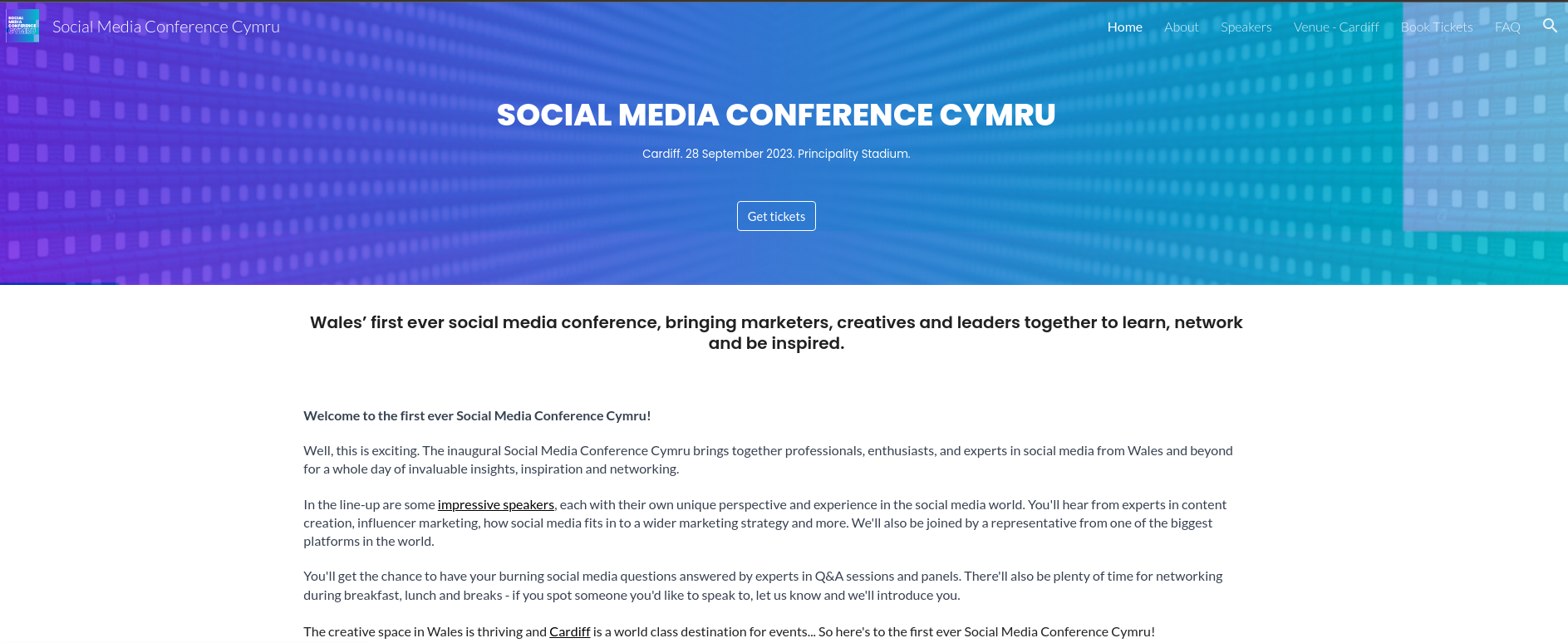
I was intrigued and delighted to see that a company is holding a social media conference for Wales. I’m a big fan of skilling-up in Wales, and a big fan of digital media. So, naturally, I offered my services for extolling the benefits of open source social media.
I got a thumbs-up on my comment from one of the organisers; though I haven’t yet been approached for my pitch. That’s fine – it’s not my event. But, looking at the existing programme, I can’t help feel as though the organisers have a bit of a blind spot – philosophically – about the downside of traditional social media.
There’s plenty in there for people who think business as usual – surveillance capitalism etc – is the right path to be following. I mean….if your business model is based on propping up the tech giants, I can understand that.
But I see very little there to speak to people who might value a different approach. To take one example – the session on how to maximise the benefits of ‘paid social (advertising) – appears to take as read that it’s a good thing.
One might equally challenge why public bodies in Wales are spending our money to compete with other users in a web of algorithms set up by private sector companies based overseas and likely not paying much in the way of tax in the UK. Particularly when open-source, ethical, ‘hate-free’ alternatives already exist; I’m thinking mostly of Mastodon and Pixelfed but there’s a myriad of others.
The landing page for the Pixelfed website.
Without wanting to repeat stuff I’ve posted earlier, the open source social media platforms are largely interconnected. That means that if you post something on Mastodon, you can also see it on Pixelfed. This functionality greatly increases the reach and longevity of your communications.
They also – mostly – ban hate speech, which means that your experience on these platforms will probably be more pleasant than on Twitter, Instagram and Tik Tok.
The lack of paid mechanisms to increase your profile (or your organisation’s profile) can appear to be a headache for social media managers. But the Fediverse rewards organisations that take a long-term approach to building relationships, and as there’s no paid advertising, there’s no short-cuts. Which rewards all the more the people who are engaging in genuine, meaningful and valuable ways.
I would love to see Wales become a leader in open source social media. I feel as though I’m making some slight inroads, partly helped by the Twitter bin-fire, but we are a long way off a true plurality.
Here’s my offer to the event organisers; you book me for a slot, and I’ll deliver a presentation for you. The title? “Why you shouldn’t come to this conference”.
Best wishes to the organisers, and I confidently look forward to hearing from you about my offer.
As someone with a strong interest in politics and public affairs, I’ve been following the IndyWales discussion with interest for many years.
Nothing has the potential to change the nature of our politics, constitution, society and environment as much as becoming an independent nation, and whilst these discussions have taken place as long as my political awareness has been in existence, they have hitherto not been part of mainstream public discourse.
The meteoric rise of YesCymru membership which now numbers more than 13,000 (from just over 2,000 at the start of 2020) has changed the framework of public debate in Wales. According to some sources, paid-up members now number more than any political party in Wales except for Labour.
I decided to take a look at mentions of YesCymru on Twitter, from the very first days (August 2014) until now. I was curious about what was driving the discussion. Taking mentions of YesCymru as a proxy for interest in the organisation as a whole (and therefore IndyWales more generally) and I wanted to test the theory that pronouncements made in Westminster have an impact on YesCymru interest.
The early years
The first graph shows the frequency of mention of YesCymru over the whole span, from August 2014 until the present day.
By recent standards, there was very little activity over those early years; the activity tended to be catalysed by events within Wales itself, such as marches for independence.
However more recently there are clearly defined peaks in activity which correlate more strongly with specific events in Westminster. For example, there was a flurry of activity on the day following the General Election in 2019 in which the Conservatives were returned with a significantly increased majority.
As with many social media movements or campaigns, there was not much in the early years to report on.
Typically, early activity from any social media account consists of regular engagement to build up ‘brand’ awareness and forge relationships.
The science of social media demonstrates empirically that large social media accounts grow more quickly and have far greater interaction, so even in the absence of external factors, there would have been an increasing trend of mentions of YesCymru over time.
However, what we can see from the data is that external factors are playing a huge role in engagement, and that the factors which appear to be playing the biggest role are indeed those performed by UK Government – as highlighted by Plaid Cymru’s Liz Saville Roberts.
I find it particularly interesting that even where decisions are taken in Westminster that do not directly affect the people of Wales – the decision not to provide free school meals to the poorest children in England as a prime example – this still results in a huge amount of increased discussion around IndyWales.
This appears to suggest that the institutions of Westminster are becoming increasingly scrutinised by the people of Wales for unfairness, not just to Wales, but to citizens in other parts of the UK.
It’s still very early days for discussions about independence in Wales, but it’s certain that analysing Twitter will continue to provide a rich seam of data for researchers examining politics and society here.