Tag: Sustainability

  • 5 years of Afallen

    5 years of Afallen

    As we have reached the milestone of 5 years at Afallen we wanted to reflect on our journey so far and what you can continue to expect from us in the future.

    We are so grateful for the past five years—a meaningful chapter where we’ve woven sustainability and the Well-being of Future Generations Act into the fabric of everything we do.

    As we step into the next five, our mission remains steadfast: to anchor work, skills, profit, and people in Wales. We look forward to collaborating with even more communities, and connecting with remarkable individuals and organisations that make our mission come to life.

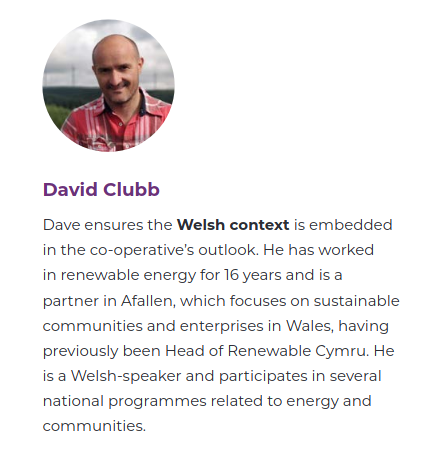
    One of our partners, David Clubb, reflected on our journey:

    “Five years ago, when we were planning the future of Afallen, I don’t think any of us had a clear view of how the organisation would look at this point. All we knew is that we wanted to keep money and skills in Wales, to work on sustainability projects, and help organisations that were wrestling with the challenge of implementing the Well-being of Future Generations goals and ways of working.

    I’m really proud of how we’ve stuck true to those initial values. They are still relevant for us today, and we have them in mind for all our projects and all our engagements with stakeholders.

    In a tiny way, Wales is richer, more skilled and hopefully more sustainable than if we hadn’t started Afallen. In the future I’d like to see us delivering even bigger impacts for all the people and organisations we touch.”

    We are grateful to have celebrated our 5th anniversary surrounded by cherished friends, family, collaborators, and kindred spirits. From all of us at Afallen, thanks for an amazing 5 years.

  • Own a tiny piece of a wind turbine

    Own a tiny piece of a wind turbine

    I’ve had the privilege and pleasure of working for the renewable energy sector for more than fifteen years – much of that supporting onshore wind.

    Onshore wind is the cheapest form of electricity, and can be deployed relatively quickly. It is the perfect complement to solar, typically increasing its output during the winter months. And I think that wind turbines themselves are elegant, beautiful and symbolic of our move away from fossil fuel and towards a better, brighter future.

    In the summer of 2019 I was asked if I wanted to help support a new kind of onshore wind project. The concept, produced by Ripple Energy, is for co-operatively owned wind projects to produce electricity, and then sell it as close to market price as possible, with the value captured for members of the co-op.

    I was intrigued, and delighted to be asked to lend my support, and so I agreed to Chair the Board of a new pilot wind project cooperative.

    Fast forward to July 2020 (and me stepping down from Chair due to Covid-19 and furlough!), and after a huge amount of hard work by Simon Peltenburg, Sarah Merrick and my fellow Board members, the project is now live. Yes, you can buy your own tiny bit of a wind farm, and – as near as possible – have a direct link between the electricity you use and the electricity you generate, straight from a wind turbine.

    The turbine is based in the Rhondda in south Wales, and will directly benefit local residents through a local impact fund. It will directly benefit the members of the cooperative by reducing their electricity bills – as long as there’s a differential between the cost of building and running the wind turbine, compared to the wholesale cost of electricity. All the models of predicted electricity prices point to this being the case.

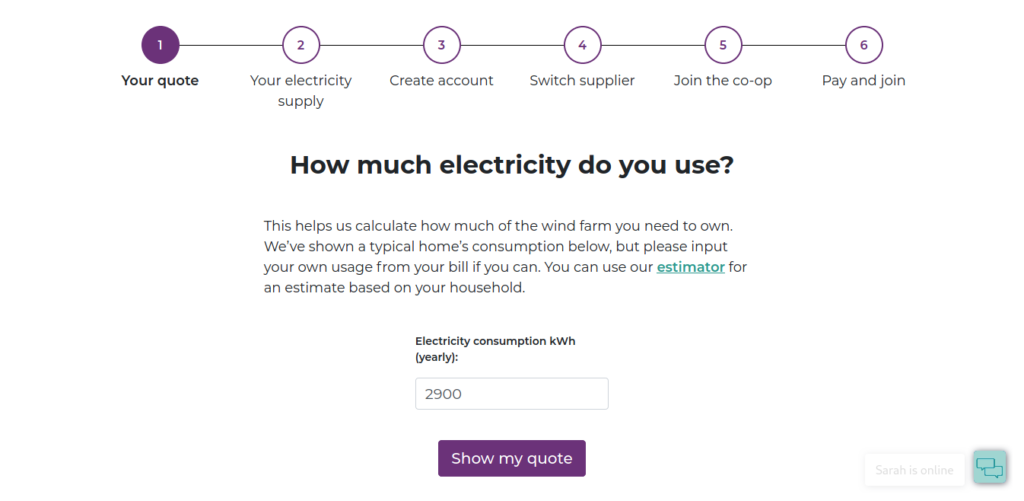
    There’s a ‘cost calculator‘ to help you find out how much a share in the coop would cost, and the potential savings you could make.

    No alt text provided for this image

    Supporting the sector

    Many people, only too aware of the impact that our everyday activities are having on climate, are keen to try to make more direct change to how we live our lives. This project, and the Ripple concept more generally, do exactly that.

    I am really excited by the prospect of tens or hundreds of these projects, growing in scale across the UK and beyond, harnessing the power of individuals and (in due course) businesses to directly put their money where the science tells us we need to.

    As usual, there are a whole bunch of caveats with this sort of ‘investment’ – available from the share document, which also features me(!) as a Board member.

    No alt text provided for this image

    You’ll need to change supplier to Octopus Energy for a while (sorry Bulb, you were great but I understand that in future there will be a range of suppliers we can switch to) – but in my case that was handled very straightforwardly.

    Please head to the website, take a look around, and if you think this is a project worth supporting, join me and hundreds of others in making it a reality.

  • Wales’ Climate Emergency

    Wales’ Climate Emergency

    Emergency: n. A serious situation or occurrence that demands immediate action.

    Climate: n. The meteorological conditions, including temperature, precipitation, and wind, that characteristically prevail in a particular region.

    On 29 April, Scotland proudly announced itself as the first nation to declare a Climate Emergency. This statement was closely followed by our own from Environment Minister, Lesley Griffiths, who added the voice of Welsh Government to the growing list of towns and cities that have signed up to acknowledge the need for urgent and drastic measures to combat climate change.

    The arrival of National Governments to the Climate Emergency declaration ‘party’ is hugely significant; not just for the undoubted symbolism it provides, and for the political heft that it gives to campaigners within Wales and Scotland, but also because it heralds the likelihood that other countries will follow suit.

    As Lesley Griffiths said, government has a role in making collective action possible. And we certainly do require collective action – both individually and at the nation-state level – if we are to arrest runaway climate change and to ensure that the planet we bequeath to our children and grandchildren is habitable.

    It was interesting to note that the following day saw the First Minister outline the timetable for making a decision on the fate of the proposed new M4 relief road. The first week of June will see Mark Drakeford setting out whether he will grant the legal orders necessary to allow the project to proceed.

    M4 – Not a done deal?

    Although a decision to issue Transport Orders in June would not necessarily guarantee that the project commences – it is still subject to a confirmatory vote in the National Assembly – it would signal that Welsh Government believes that attempting to ease the flow of traffic by building additional road capacity is a potentially higher priority than tackling climate change.

    It would also put Welsh Government in direct conflict with the Office of the Commissioner for Future Generations which has stated that the proposed scheme does not properly take into account the needs of future generations.

    Whilst I have no doubt that our government could produce a narrative which demonstrates that a new piece of motorway is exactly what our young and yet-to-be-born citizens need, it feels to me as though this decision is totemic for what we, as the people of Wales, see as of value. Do we truly value the ability of our future citizens, innocent of blame, to live in a climate which resembles that which we ourselves have experienced? Or do we value more highly the convenience of private car owners in a small corner of Wales to shave a few minutes from their journey time?

    It is Business as Usual, with modest tweaks, which has got us into this emergency. And if it really is, as Welsh Government states, an emergency, then we need drastic, radical measures, individually and collectively, to avoid tragic outcomes for our ecosystems.

    Credit where it’s due

    I applaud Welsh Government for making such a brave statement of intent on the Climate Emergency, as I have consistently applauded the creation and implementation of the Well-being of Future Generations Act. But if intent is to have meaning, we must make decisions differently. We must prioritise accordingly. And we must take every opportunity to decide against projects and systems which increase poor outcomes for the environment.

    In giving credit to Welsh Government for their statement, I would also like to pay homage to the thousands of Welsh campaigners who have become part of the Extinction Rebellion movement, which has undoubtedly played an immense role in raising the issue within the national consciousness. Their bravery, tenacity and self-sacrifice is both humbling and heartening. We owe a debt of gratitude to our fellow citizens for campaigning on behalf of our future generations, and on behalf of the ecosystems which will continue to support them in the decades to come.

    This post was first published by the Institute of Welsh Affairs