Tag: Social media

  • At last – a social media conference for Wales 🥳🙄

    At last – a social media conference for Wales 🥳🙄

    At last – a social media conference for Wales 🥳🙄

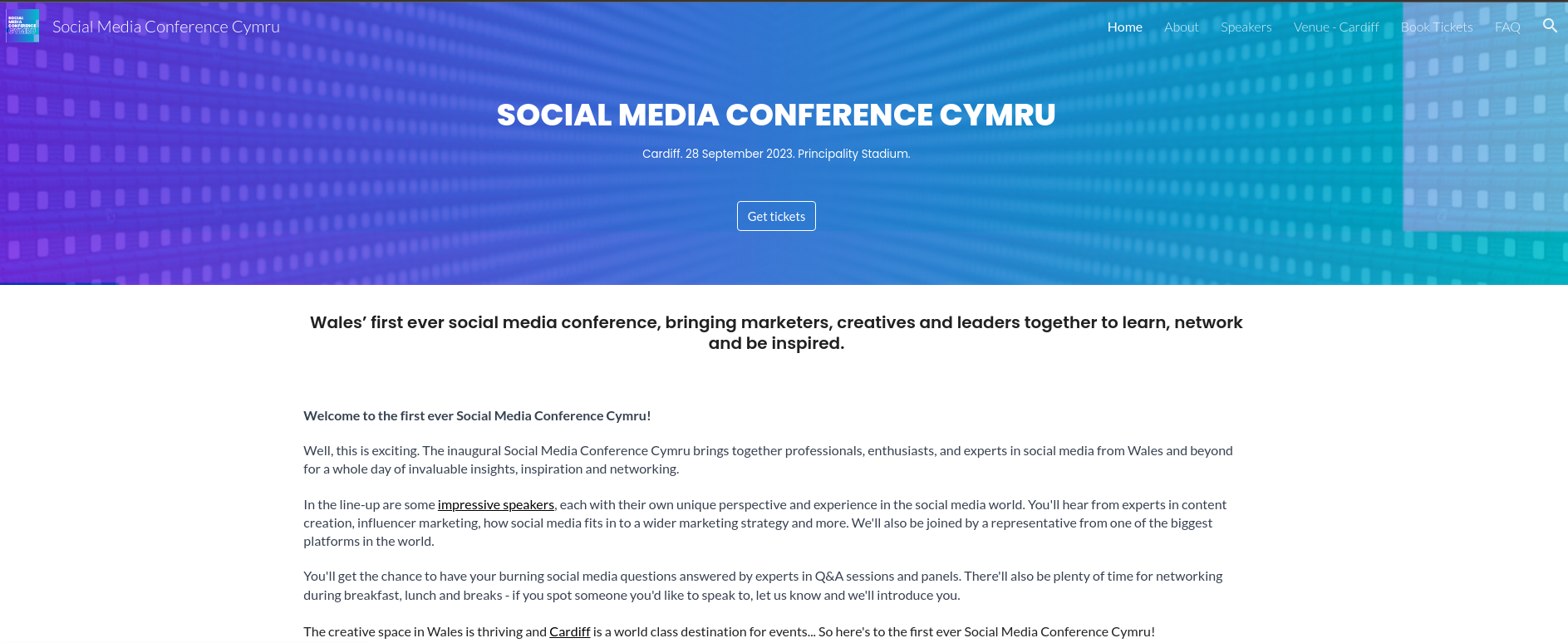
    I was intrigued and delighted to see that a company is holding a social media conference for Wales. I’m a big fan of skilling-up in Wales, and a big fan of digital media. So, naturally, I offered my services for extolling the benefits of open source social media.

    I got a thumbs-up on my comment from one of the organisers; though I haven’t yet been approached for my pitch. That’s fine – it’s not my event. But, looking at the existing programme, I can’t help feel as though the organisers have a bit of a blind spot – philosophically – about the downside of traditional social media.

    There’s plenty in there for people who think business as usual – surveillance capitalism etc – is the right path to be following. I mean….if your business model is based on propping up the tech giants, I can understand that.

    But I see very little there to speak to people who might value a different approach. To take one example – the session on how to maximise the benefits of ‘paid social (advertising) – appears to take as read that it’s a good thing.

    One might equally challenge why public bodies in Wales are spending our money to compete with other users in a web of algorithms set up by private sector companies based overseas and likely not paying much in the way of tax in the UK. Particularly when open-source, ethical, ‘hate-free’ alternatives already exist; I’m thinking mostly of Mastodon and Pixelfed but there’s a myriad of others.

    Landing page for the Pixelfed website
    The landing page for the Pixelfed website.

    Without wanting to repeat stuff I’ve posted earlier, the open source social media platforms are largely interconnected. That means that if you post something on Mastodon, you can also see it on Pixelfed. This functionality greatly increases the reach and longevity of your communications.

    They also – mostly – ban hate speech, which means that your experience on these platforms will probably be more pleasant than on Twitter, Instagram and Tik Tok.

    The lack of paid mechanisms to increase your profile (or your organisation’s profile) can appear to be a headache for social media managers. But the Fediverse rewards organisations that take a long-term approach to building relationships, and as there’s no paid advertising, there’s no short-cuts. Which rewards all the more the people who are engaging in genuine, meaningful and valuable ways.

    I would love to see Wales become a leader in open source social media. I feel as though I’m making some slight inroads, partly helped by the Twitter bin-fire, but we are a long way off a true plurality.

    Here’s my offer to the event organisers; you book me for a slot, and I’ll deliver a presentation for you. The title? “Why you shouldn’t come to this conference”.

    Best wishes to the organisers, and I confidently look forward to hearing from you about my offer.

  • Supporting Mastodon in Wales

    Supporting Mastodon in Wales

    One of Afallen’s values is championing the use of Creative Commons and open source solutions.

    This is because we believe – and the evidence supports our view – that a cooperative and co-production approach provides bigger overall benefits to society than a purely commercial economy.

    Our first White Paper outlined the potential for Wales that could accrue from supporting open source.

    In practising what we preach, we have embraced two open-source social media platforms; Mastodon (like an open-source version of Twitter), and Pixelfed (similar to Instagram but free and open source).

    Afallen Partner David Clubb has been a moderator on Toot.Wales, the Welsh instance of Mastodon, since 2018, and is now on the governing body.

    Toot.Wales is nearly five years old, and David recently gave an interview to S4C about his experiences with the platform – and why it’s been growing so quickly over the last year.

    If you would like to find out more about the benefits of an open-source approach to your organisation’s operations and communications, you can get in touch with David via email, or of course, via Mastodon on Toot.Wales!

  • Open source social media will save our democracy

    This guest blog post was written by our Partner, David Clubb. Afallen is proud to support, champion and use open source social media networks including Pixelfed and Mastodon. We’re happy to work with organisations to help you understand, and incorporate, open source social media into your digital strategy and workflow.

    In an opinion piece in yesterday’s Guardian newspaper, Carole Cadwalladr describes how Facebook is the virus that has enabled the catastrophes of both Brexit, and the ascension of Mr. Trump to the White House.

    Facebook allows lies to spread virtually unchecked. It permits those people with the most money and least scruples to disseminate falsehoods to those most susceptible. And it allows this with no prospect of holding individuals or organisations to account.

    Whilst Facebook, Twitter, Instagram and other social media platforms have enabled a blossoming of connection, conversation and shared ideas; they have also created a bitter, divisive, polarised digital world where shareholder value is enhanced most by highlighting division and minimising harmony. Quiet, reasoned thoughts are filtered out by algorithms designed to maximise clicks, retweets and likes. Volume is king.

    Many people want to make a difference but they don’t know how. But there is an antidote to the virus of misinformation and hatred. That antidote is open source social media, and it’s already spreading at the fringes of the online universe.

    Open source social media

    Open source social media doesn’t permit advertising. It doesn’t sell data. It prohibits hate speech and intolerance*. And it’s moderated by users, not resourced at the behest of global tech giants. 

    More worryingly for the incumbents, the hotbeds of innovation are no longer in the mega-corporations with their teams of thousands in the offices and boardrooms of (mostly) America. They are in the open source equivalents, with code freely available for thousands of supporters and volunteers across the globe to build and improve. 

    From the perspective of Wales’ Future Generations Act, anybody using, promoting or supporting these open source platforms is supporting the goal of a Globally Responsible Wales. From a worldwide perspective, that same user or supporter is increasing the freely-accessible sum of human knowledge. 

    One clear example of this innovation is the federation between open source platforms (also known as the Fediverse). Federation is the ability to connect different social media platforms, so that posts and updates become mutually visible.

    This means that if you post a photo on Pixelfed (ethical version of Instagram), it pops up in your feed on Mastodon (ethical version of Twitter). Likewise websites, blogs and updates on the ethical equivalent of pretty much every ‘surveillance capitalism’ platform you can think of can cross-post to each other, enabling much more streamlined conversations and updates.

    What are the downsides (and upsides)?

    Let’s deal with the elephant in the room; the big downside of the new open source Fediverse is that user numbers are far, far lower than for the established platforms.

    This is hardly surprising; there’s a headstart of fifteen years or so for many of the tech giants. And the science behind social media means that there’s an agglomeration effect; once most of your friends are engaged on a platform, it takes a significant effort to leave them behind and start something new.

    For me personally it meant (mostly) leaving my Twitter account of several thousand followers, and starting a fresh new Mastodon account on toot.wales, one of many ‘locality’ type instances across the world. 

    I instantly ‘lost out’ on the instantaneous stream of updates from my many friends and colleagues, and on the rough-and-tumble of (what passes for) debate there. There’s likely an impact on my ability to promote my new business, Afallen, through that network, too. 

    However, what I have found is a new community of online friends and collaborators. I’ve witnessed almost zero hatred or bullying. And I’ve relished using platforms which don’t harvest my personal data in order to sell them to companies who may – in many cases – place profit above the public good.

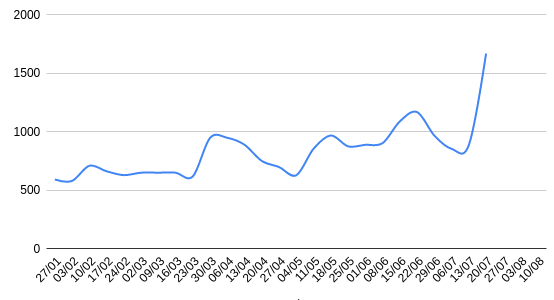
    The truth is that the community of users in Mastodon (and the other platforms) is growing steadily – see the example below for activity on the toot.wales Mastodon instance. At some tipping point – I’m convinced – the growth will start to become exponential, and then the users who became active first will see the biggest benefits.

    Weekly interactions on toot.wales, the Welsh instance of Mastodon

    But the biggest benefit of all will come when people start to leave the platforms of the tech giants en masse, lessening their influence as the custodians of online debate and information-sharing, and contributing to a kinder, gentler and more thoughtful world of public discourse.

    Further information

    If you’re interested in finding out more about the ethical, privacy-conscious alternatives to the mainstream social media platforms, head to switching.software.

    *Almost all ‘instances’ of open source social media ban hate and intolerance. Those that don’t are generally blocked, so the hatred is restricted to a small portion of the Fediverse