
Tag: Disability

  • In praise of Mike Clubb – and volunteers everywhere

    In praise of Mike Clubb – and volunteers everywhere

    In praise of Mike Clubb – and volunteers everywhere

    My dad, Mike Clubb, spent his whole working life as a history teacher. Bridgend for the most part, but also Cwmbrân and Zambia.

    It’s hard for a son to objectively assess his father’s quality as a teacher; but from conversations I’ve had with ex-pupils, he seems to be fairly high regarded, even by the ‘naughty kids’ (strict but fair being the general feedback).

    The Welsh Arsenal

    His love of history was given a particularly local flavour when he took a significant interest in the lives of the people, up to 32,000 of them, who worked in the arsenal in Bridgend during WW2. Most of those people were women who were suddenly faced with employment opportunities and a wage – things not necessarily in great supply for women in the ’40s.

    Dad wrote a book in 2007, ‘The Welsh Arsenal’, which kick-started a campaign to have the workers recognised for the part they played in the war effort.

    The campaign, led by the Bridgend Civic Trust, culminated in a public plaque and ceremony, attended by Huw Irranca-Davies, who read out a letter from Gordon Brown (Prime Minister at the time).
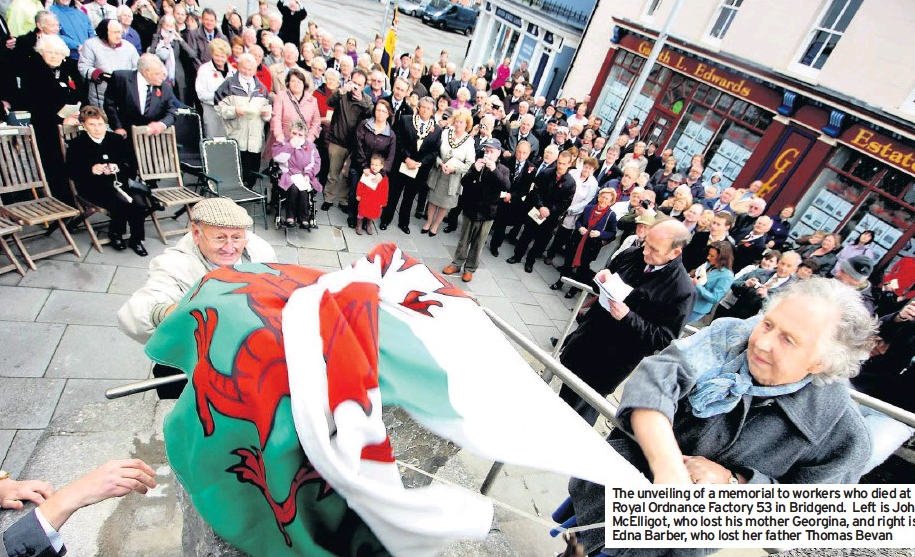
    Photo of the plaque unveiling, from a South Wales Echo story

    Since the book was published, dad has spent countless hours of his evenings and weekends traveling the length and breadth of south Wales to educate others about this unique historical legacy; and to inspire others to take an interest in their own local histories.

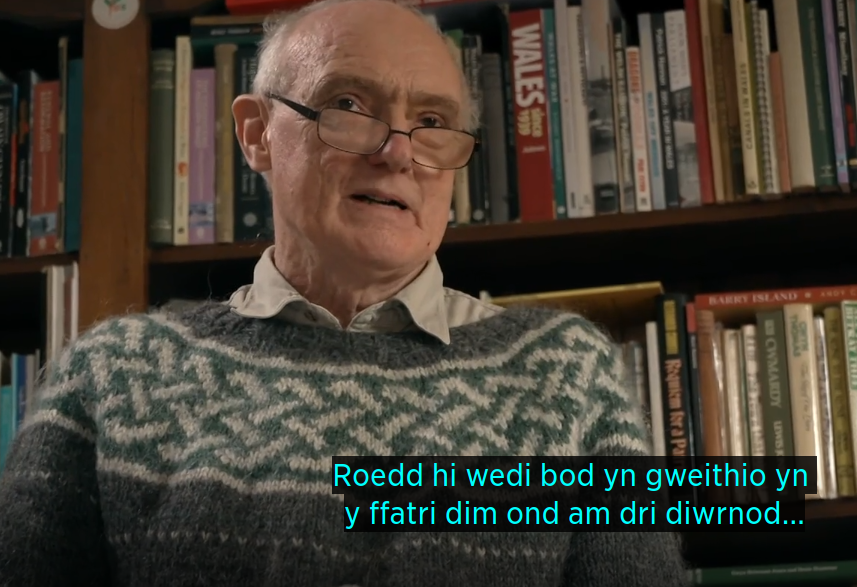
    Dad didn’t grow up speaking Welsh; he has learned it as an adult. So it was amazing to see him able to participate in an S4C programme about disability recently. His grandchildren were delighted too (apparently being on telly still has some caché even for kids today!)

    Excerpt from the S4C programme “Y Frwydr: Stori Anabledd”

    In praise of volunteers

    My dad’s obvious love of history, and his passion to share it with others, is simultaneously both mundane and extraordinary.

    It’s mundane only in the way that, across Wales, hundreds of thousands of us volunteer in our own ways every day, making life a bit better for people in our local communities, or communities of interest further afield. In other words, it’s ‘commonplace, ordinary’.

    But what an extraordinary gift of love and mutual cooperation.

    From the local history societies, civic societies, local museums, to the environmental organisations that are showing a path to local activism and love of nature, to every form of social, community, health and sporting activity. Our lives are supported by the invisible threads of generosity of spirit, of time, and frequently of money.

    You may have heard people say that society doesn’t matter. That only economics matters, only markets matter.

    They couldn’t be further from the truth. Not only is the current system broken, using the commons as a convenient place to dump pollution, and harvesting financial wealth as a compensation; but a market-driven approach, with every transaction needing to carry an equivalent monetary exchange, can never provide the rich experiences that humans need to fulfill their true potential.

    Next time you hear someone talk about ‘consumers’, remember that they really mean people; and each of us has our own part to play in forging a better society.

    The wonderful people who give freely of their time, energy and love are worthy of our huge thanks. So here’s to my dad, Mike Clubb, and to everybody like him who gifts their time within their local communities across Wales and beyond.

  • The symbolism of the M4 in Wales

    The M4 decision

    With one tweet, the First Minister Mark Drakeford raised Wales’ aspirations, values, and environmental credentials. The decision was publicly opposed by a range of trade bodies and representatives of political parties, including some from the First Minister’s own party.

    The symbolism of this decision is hard to overstate. A project of Carwyn Jones, who would surely have pushed it through despite his own government’s Future Generations Act, this proposal is now where it rightly belongs – on the scrapheap of 20th Century ‘solutions’.

    In making his decision, Mark Drakeford stated that the financial position of Welsh Government would not permit him to make the compulsory purchase orders necessary to proceed with the project. However, he also said that he disagreed with the Inspector, and that the environmental considerations were also too great to allow the project to go ahead.

    The latter part of Prof. Drakeford’s reasoning will have given heart to the many thousands of environmental campaigners who have made this a cause célèbre for the wider environmental movement.

    Most interesting for Afallen though was the statement that the First Minister did not think that the Future Generations Act had been insufficiently regarded in the process.

    “The Member has asked me about the well-being of future generations legislation. I want to make it clear, Llywydd, that I read very carefully the evidence that was given by the commissioner, and I read very carefully the way in which the QC, on behalf of the Welsh Government, responded to her interpretation of the Act. My own view is that it was not a reading of the Act that I heard expressed on the floor of this Assembly that proposals for development have to satisfy all seven goals and all well-being objectives, and that they have to do so equally across all the goals and the objectives. It does seem to me inevitable that, in any plan for development, there will be some balancing between the different goals and the objectives that the Act introduces. I did not dissent from the view of the inspector, therefore, that the requirements of the Act had been fairly represented by the Welsh Government in the way that it presented its evidence on the Act to the inspector.”

    The wider symbolism

    As important – and welcome – as this decision was, there is almost as much value in the symbolism it provides for Wales’ aspirations and its environmental (and fiscal!) credentials. Many campaigners had made the point that were the decision made to press ahead with the project, the Future Generations Act would have been shown to be worthless.

    We do not reach that assessment – although it would surely have been a hammer-blow to the Act and to the credibility of the Office of the Future Generations Commissioner which has robustly opposed the project, including several detailed counter-assessments of its efficacy and proposals. However it’s hard to square the spend of billions of pounds on several miles of tarmac, with the needs of Wales’ citizens as yet unborn. In the public discussion following the decision, it is the future generations – the unborn – who have figured least on the part of supporters of the project.

    We consider that the First Minister was right to make the decision that he did, and to base it on financial and environmental grounds. But we side with the office for Future Generations, and do not consider that all aspects of the WFG Act had been appropriately considered.

    This decision has highlighted the divide that exists in the public debate about Wales’ future direction. If the battle of today in the UK is about , in Wales it is as much about how our economy, environment and culture develops. The battle of ideas – and money – has been waged over the Swansea Bay Tidal Lagoon, electrification of the main railway line to Swansea, and the naming of a bridge. The latest decision would appear to suggest that the struggle is likely to continue for the foreseeable future.

    To date, it seemed that Wales, in common with standard economic orthodoxy, across the UK and in many other countries, was not sufficiently considering the responsibilities we owe to our citizens, environment and the global community. Perhaps yesterday’s decision redresses the balance somewhat – and there is excitement in the possibility that it may augur the start of a shift from 20th Century thinking more generally in Welsh Government policy.

  • Wales’ talent is everywhere. We want the best of it

    A Wales of all the talents

    We believe that Wales’ best potential will only be attained if we can tap the abilities of all of our people. We also know that many people struggle to reach their own full potential, not because they lack the talent or the skills, but because their disabilities make entering the workplace more challenging than it should be.

    We want to work with the most talented people – wherever they are based, and whatever their physical circumstances – and are delighted to announce that we have been accepted to the ‘Disability Confident‘ scheme. It’s a UK Government scheme which aims to support employers in recruiting and retaining the best talent, including from the pools of people who have a disability or health condition.

    We intend to understand from disabled people’s user led organisations how we can make any work opportunities as accessible as possible to as wide a range of people as possible. We think that our method of working with people embedded in their local communities will assist with the accessibility of our work opportunities, because colleagues are able to work in the home or office conditions which suit them best.

    The spirit of Future Generations

    The Future Generations Well-being Goals and Ways of Working are both supported by good practice engendered in the Disability Confident scheme.

    Making it easier for people with health problems or disabilities into meaningful and valued work supports:

    • A ‘healthier Wales’ by enabling more people to enter the workplace, reducing stigma and mental health issues
    • A ‘more resilient Wales’ by helping to improve skills and retaining knowledge across the widest possible range of people
    • A ‘more equal Wales’ by ensuring that the fruits of gainful employment are shared more equally with currently disadvantaged groups
    • A ‘prosperous Wales’ by making the best possible talent available to us, and enabling us to provide an outstanding service to our clients

    The Future Generations Act also specifies the need to work differently, using the Five Ways of Working. With Afallen taking part in the Disability Confident scheme, we can more easily demonstrate:

    • Integration of our outputs with the needs of other service delivery partners in the public or private sector
    • Strengthening Wales’ long-term ability to provide meaningful employment for people with different abilities
    • The ability of people with disabilities or health conditions to more easily access work, mitigating future costs to the individual or public support services (prevention)
    • Collaboration with new partner organisations which could lead to better Well-being Outcomes for all parties
    • Involvement with people who reflect Wales’ diversity in full 

    It’s important to us that a Wales-based consultancy is able to offer an extremely high level of quality, from a cohort of specialists which reflect Wales’ diversity in all aspects. Working with people from a wide range of backgrounds and life experiences increases overall performance, and we think that our first steps into the Disability Confident scheme will help us achieve the excellence that is our aim.

    You can see all our accreditations in the footer of our webpage – with more to follow in the coming months! 

    If you have any thoughts on our approach, please don’t hesitate to get in touch, or drop us some comments below.