Category: Fediverse

  • Technology and Cymraeg

    Technology and Cymraeg

    Technology and Cymraeg

    In June 2024 Welsh Government launched a ‘call for information‘ on what is needed to make technology more friendly to Cymraeg.

    I produced a response to highlight the power of open source in enabling low-cost, high quality and ‘translation-friendly’ services. I post the response in full below.

    Hashtags:

    Recommendations

    • The value of Free and Open Source Software (FOSS) to health and well-being in Wales is so profound that it should be supported through a fund or equivalent of approximately 0.001% of the NHS budget
    • Public bodies in Wales should be required to use a FOSS equivalent (where one exists) of any existing proprietary social media platform, and to contribute to Welsh translations of the platforms

    Philosophy

    Technology is never agnostic. The deployment of technological tools depends strongly on the philosophy of those who created it. My response to this call for information is therefore predicated on the standpoint that open source solutions are generally preferable to commercial and proprietary alternatives. 

    Open source (also known as FOSS – Free and Open Source Software) has four freedoms:

    • Freedom 0: The freedom to run the software as you wish, for any purpose.
    • Freedom 1: The freedom to study how the software works, and change it so it does your computing as you wish
    • Freedom 2: The freedom to redistribute copies so you can help others
    • Freedom 3: The freedom to distribute copies of your modified versions to others. By doing this you can give the whole community a chance to benefit from your changes.  

    The beauty of FOSS to Wales is:

    • Using FOSS eliminates the leakage of money from Wales for licencing costs for using proprietary software
    • FOSS usually makes it very easy to translate, greatly reducing barriers to adoption for people who would like to use the Welsh language. 
    • Using FOSS can help upskill people within Wales (see freedoms 1 and 2).
    • Using and supporting FOSS directly helps achieve Wales’ future generations goal of ‘Globally Responsible’, because any improvements that are supported or produced from participants, volunteers or donors in Wales, are freely available for use or adoption by anybody globally, reducing the barriers to participation by the poorest in society (in Wales this supports the socio-economic duty)

    In the European context, Wales is a poor country within a poor unitary state, particularly if London is excluded. Issues of ownership and licensing are very important in this context. The use of proprietary software effectively means that the people of Wales are paying people elsewhere so that we can de-skill ourselves.

    In February 2022 I produced a White Paper entitled: “Why Wales should embrace free and open source software”. In it I made the case for open source against several Welsh Government objectives in the Digital Strategy for Wales. FOSS directly supports the following components:

    • Digital inclusion – creating digital public goods
    • Digital skills – widening participation in learning, and participation in communities of technology and interest
    • Digital economy – for some sectors, savings of more than 80% have been achieved through the use of FOSS

    For further details see the White Paper.

    The benefits of Cymraeg

    The use of the Welsh language produces numerous benefits for the individual, and still more for the community at large. Some of the individual benefits include:

    • Improved health outcomes
    • Improved career prospects
    • Increased performance in learning additional languages
    A mind map showing the links between the Welsh language and a range of positive well-being indicators

    Some of the benefits of using Cymraeg, all of which are evidence by peer-reviewed literature

    The health, educational and economic benefits are so profound that I believe the case should be made to divert a tiny proportion (say 0.001%) of the budget for the NHS to establish or fund an independent organisation aimed at improving understanding and adoption of FOSS in Wales.

    Cymraeg and communication technologies

    Welsh public institutions have been ‘captured’ by the early proprietary communication platforms to the extent that most use X/Twitter, LinkedIn, Instagram or other platforms without a thought as to the rationale, or the case for using alternatives that better support the Welsh language.

    The use of proprietary platforms indirectly enriches far-right voices, and certainly leads to a leakage of money and skill to (usually) America-based organisations through advertising and data harvesting.

    The proprietary platforms are not generally responsive to requests for making their interfaces multi-lingual, in direct contrast to their FOSS equivalents. 

    In order to properly implement the requirements of the Well-being of Future Generations Act, as well as the Welsh Language Act, public bodies in Wales should therefore be required to use FOSS social media platforms (where they exist) in addition to, or as a replacement for, their existing use of proprietary social media platforms. 

    This would give the opportunity for them to also contribute to the Welsh language translations of these platforms, making them more suitable for Welsh-language users.

    Other blog posts relevant to this article:
  • At last – a social media conference for Wales 🥳🙄

    At last – a social media conference for Wales 🥳🙄

    At last – a social media conference for Wales 🥳🙄

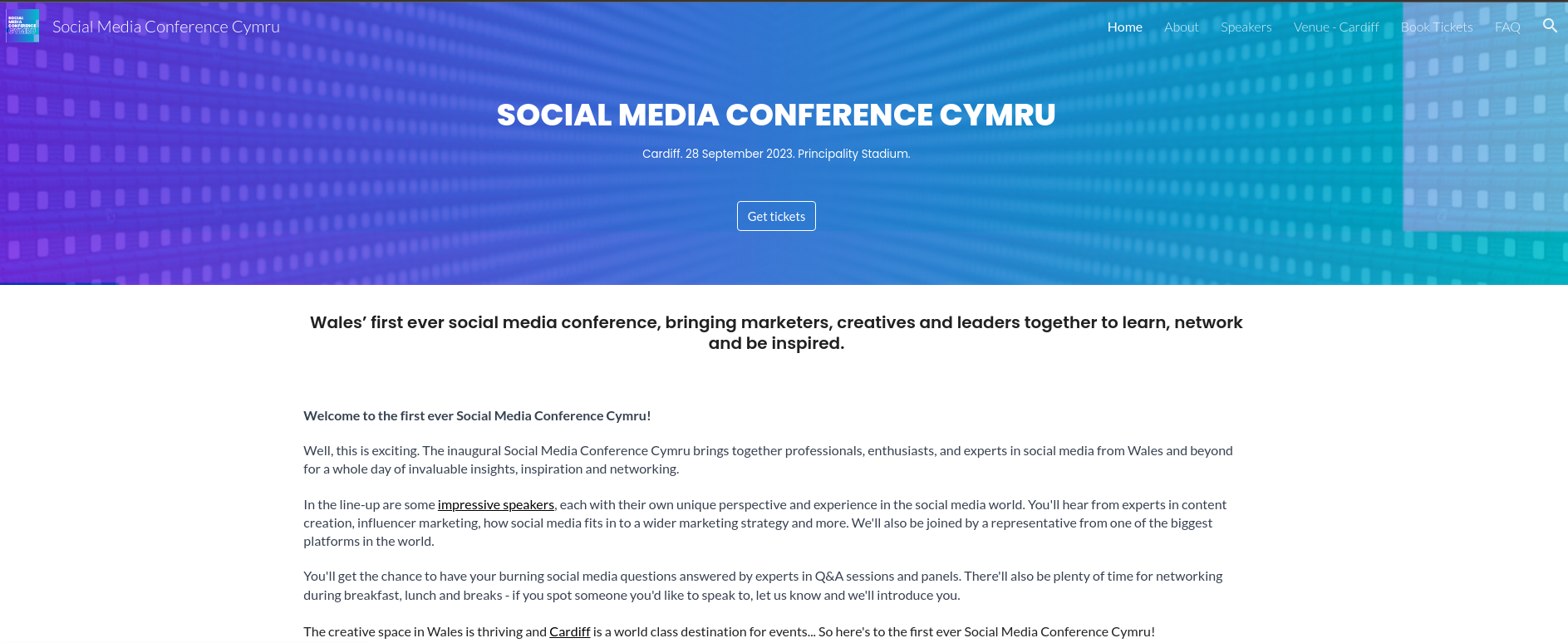
    I was intrigued and delighted to see that a company is holding a social media conference for Wales. I’m a big fan of skilling-up in Wales, and a big fan of digital media. So, naturally, I offered my services for extolling the benefits of open source social media.

    I got a thumbs-up on my comment from one of the organisers; though I haven’t yet been approached for my pitch. That’s fine – it’s not my event. But, looking at the existing programme, I can’t help feel as though the organisers have a bit of a blind spot – philosophically – about the downside of traditional social media.

    There’s plenty in there for people who think business as usual – surveillance capitalism etc – is the right path to be following. I mean….if your business model is based on propping up the tech giants, I can understand that.

    But I see very little there to speak to people who might value a different approach. To take one example – the session on how to maximise the benefits of ‘paid social (advertising) – appears to take as read that it’s a good thing.

    One might equally challenge why public bodies in Wales are spending our money to compete with other users in a web of algorithms set up by private sector companies based overseas and likely not paying much in the way of tax in the UK. Particularly when open-source, ethical, ‘hate-free’ alternatives already exist; I’m thinking mostly of Mastodon and Pixelfed but there’s a myriad of others.

    Landing page for the Pixelfed website
    The landing page for the Pixelfed website.

    Without wanting to repeat stuff I’ve posted earlier, the open source social media platforms are largely interconnected. That means that if you post something on Mastodon, you can also see it on Pixelfed. This functionality greatly increases the reach and longevity of your communications.

    They also – mostly – ban hate speech, which means that your experience on these platforms will probably be more pleasant than on Twitter, Instagram and Tik Tok.

    The lack of paid mechanisms to increase your profile (or your organisation’s profile) can appear to be a headache for social media managers. But the Fediverse rewards organisations that take a long-term approach to building relationships, and as there’s no paid advertising, there’s no short-cuts. Which rewards all the more the people who are engaging in genuine, meaningful and valuable ways.

    I would love to see Wales become a leader in open source social media. I feel as though I’m making some slight inroads, partly helped by the Twitter bin-fire, but we are a long way off a true plurality.

    Here’s my offer to the event organisers; you book me for a slot, and I’ll deliver a presentation for you. The title? “Why you shouldn’t come to this conference”.

    Best wishes to the organisers, and I confidently look forward to hearing from you about my offer.

  • Bydd cyfryngau cymdeithasol (ffynhonnell agored) yn arbed ein democratiaeth

    Mewn darn barn ym mhapur newydd y Guardian ddoe, mae Carole Cadwalladr yn disgrifio sut mai Facebook yw’r firws sydd wedi galluogi trychinebau Brexit, ac esgyniad y celweddog, Mr Trump, i’r Tŷ Gwyn.

    Mae Facebook yn caniatáu i gelwydd ledaenu bron heb ei wirio. Mae’n caniatáu i’r bobl hynny sydd â’r mwyaf o arian a lleiaf o ysgrythurau ledaenu anwireddau i’r rhai mwyaf tueddol o ddioddef. Ac mae’n caniatáu hyn heb unrhyw obaith o ddwyn unigolion neu sefydliadau i gyfrif.

    Er bod Facebook, Twitter, Instagram a llwyfannau cyfryngau cymdeithasol eraill wedi galluogi cysylltiad, sgwrs a syniadau a rennir; maent hefyd wedi creu byd digidol chwerw, ymrannol, polariaidd lle mae gwerth cyfranddaliwr yn cael ei wella fwyaf trwy dynnu sylw at rannu a lleihau cytgord. Mae meddyliau tawel, rhesymegol yn cael eu hidlo allan gan algorithmau sydd wedi’u cynllunio i wneud y mwyaf o gliciau, ail-drydariadau a hoff bethau. Cyfrol yn frenin.

    Mae llawer o bobl eisiau gwneud gwahaniaeth ond nid ydyn nhw’n gwybod sut. Ond mae gwrthwenwyn i firws camwybodaeth a chasineb. Cyfryngau cymdeithasol ffynhonnell agored yw’r gwrthwenwyn hwnnw, ac mae eisoes yn lledu ar gyrion y bydysawd ar-lein.

    Cyfryngau cymdeithasol ffynhonnell agored

    Nid yw cyfryngau cymdeithasol ffynhonnell agored yn caniatáu hysbysebu. Nid yw’n gwerthu data. Mae’n gwahardd lleferydd casineb ac anoddefgarwch*. Ac mae’n cael ei gymedroli gan ddefnyddwyr, heb adnoddau ar gais cewri technoleg fyd-eang.

    Yn fwy pryderus i’r perigloriaid, nid yw gwelyau poeth arloesi bellach yn y mega-gorfforaethau gyda’u timau o filoedd yn swyddfeydd ac ystafelloedd bwrdd America (yn bennaf). Maent yn yr hyn sy’n cyfateb i ffynhonnell agored, gyda chod ar gael am ddim i filoedd o gefnogwyr a gwirfoddolwyr ledled y byd ei adeiladu a’i wella.

    O safbwynt Deddf Cenedlaethau’r Dyfodol Cymru, mae unrhyw un sy’n defnyddio, hyrwyddo neu gefnogi’r llwyfannau ffynhonnell agored hyn yn cefnogi nod Cymru sy’n Gyfrifol yn fyd-eang. O safbwynt byd-eang, mae’r un defnyddiwr neu gefnogwr hwnnw’n cynyddu’r swm o wybodaeth ddynol sydd ar gael yn rhwydd.

    Un enghraifft glir o’r arloesedd hwn yw’r ffederasiwn rhwng llwyfannau ffynhonnell agored (a elwir hefyd yn Fediverse). Ffederasiwn yw’r gallu i gysylltu gwahanol lwyfannau cyfryngau cymdeithasol, fel bod swyddi a diweddariadau yn dod yn weladwy i’r ddwy ochr.

    Mae hyn yn golygu, os ydych chi’n postio llun ar Pixelfed (fersiwn foesegol o Instagram), mae’n ymddangos yn eich porthiant ar Mastodon (fersiwn foesegol o Twitter). Yn yr un modd gall gwefannau, blogiau a diweddariadau ar gyfwerth moesegol bron pob platfform ‘gwyliadwriaeth cyfalafiaeth’ y gallwch chi feddwl amdano groes-bostio i’w gilydd, gan alluogi sgyrsiau a diweddariadau llawer symlach.

    Beth yw’r anfanteision (a’r fanteision)?

    Gadewch inni ddelio â’r eliffant yn yr ystafell; anfantais fawr y Fediverse ffynhonnell agored newydd yw bod niferoedd y defnyddwyr yn llawer, llawer is nag ar gyfer y llwyfannau sefydledig.

    Go brin fod hyn yn syndod; mae yna ben blaen o bymtheng mlynedd i lawer o’r cewri technoleg. Ac mae’r wyddoniaeth y tu ôl i’r cyfryngau cymdeithasol yn golygu bod yna effaith crynhoad; unwaith y bydd y rhan fwyaf o’ch ffrindiau wedi ymgysylltu ar blatfform, mae’n cymryd ymdrech sylweddol i’w gadael ar ôl a dechrau rhywbeth newydd.

    I mi yn bersonol roedd yn golygu (yn bennaf) gadael fy nghyfrif Twitter o filoedd o ddilynwyr, a dechrau cyfrif Mastodon newydd ffres ar toot.wales, un o lawer o achosion tebyg i ‘locality’ ledled y byd.

    Fe wnes i ‘golli allan’ ar unwaith ar y llif ar unwaith o ddiweddariadau gan fy ffrindiau a chydweithwyr niferus, ac ar y ddadl fras-a-dillad (yr hyn sy’n pasio amdani) yno. Mae’n debygol y bydd effaith ar fy ngallu i hyrwyddo fy musnes newydd, Afallen, trwy’r rhwydwaith hwnnw hefyd.

    Fodd bynnag, yr hyn a ddarganfyddais yw cymuned newydd o ffrindiau a chydweithwyr ar-lein. Rwyf wedi gweld casineb neu fwlio bron yn sero. Ac rydw i wedi bod yn falch iawn o ddefnyddio llwyfannau nad ydyn nhw’n cynaeafu fy data personol er mwyn eu gwerthu i gwmnïau a allai – mewn llawer o achosion – osod elw uwchlaw budd y cyhoedd.

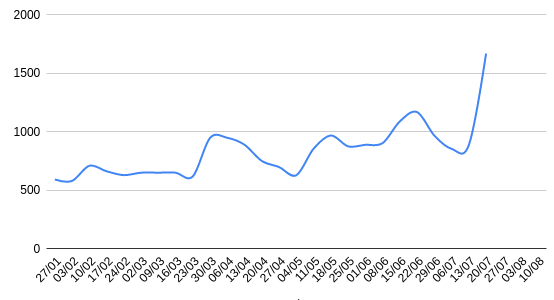
    Y gwir yw bod cymuned y defnyddwyr ym Mastodon (a’r llwyfannau eraill) yn tyfu’n gyson – gweler yr enghraifft isod am weithgaredd ar enghraifft Mastodon toot.wales. Ar ryw bwynt tipio – rwy’n argyhoeddedig – bydd y twf yn dechrau dod yn esbonyddol, ac yna bydd y defnyddwyr a ddaeth yn weithredol gyntaf yn gweld y buddion mwyaf.

    Gweithgaredd wythnosol ar toot.wales

    Ond daw’r budd mwyaf oll pan fydd pobl yn dechrau gadael llwyfannau’r cewri technoleg en masse, gan leihau eu dylanwad fel ceidwaid dadl ar-lein a rhannu gwybodaeth, a chyfrannu at fyd mwy caredig, ysgafnach a mwy meddylgar o ddisgwrs gyhoeddus. .

    Gwybodaeth bellach
    Os oes gennych ddiddordeb mewn darganfod mwy am y dewisiadau amgen moesegol, ymwybodol o breifatrwydd i’r llwyfannau cyfryngau cymdeithasol prif ffrwd, ewch i switching.software.

    *Mae bron pob ‘achos’ o gyfryngau cymdeithasol ffynhonnell agored yn gwahardd casineb ac anoddefgarwch. Y rhai nad ydynt yn gyffredinol yn cael eu blocio, felly mae’r casineb wedi’i gyfyngu i gyfran fach o’r Fediverse

  • Open source social media will save our democracy

    Open source social media will save our democracy

    Join Mastodon homepage

    Open source social media will save our democracy

    In an opinion piece in yesterday’s Guardian newspaper, Carole Cadwalladr describes how Facebook is the virus that has enabled the catastrophes of both Brexit, and the ascension of Mr. Trump to the White House.

    Facebook allows lies to spread virtually unchecked. It permits those people with the most money and least scruples to disseminate falsehoods to those most susceptible. And it allows this with no prospect of holding individuals or organisations to account.

    Whilst Facebook, Twitter, Instagram and other social media platforms have enabled a blossoming of connection, conversation and shared ideas; they have also created a bitter, divisive, polarised digital world where shareholder value is enhanced most by highlighting division and minimising harmony. Quiet, reasoned thoughts are filtered out by algorithms designed to maximise clicks, retweets and likes. Volume is king.

    Many people want to make a difference but they don’t know how. But there is an antidote to the virus of misinformation and hatred. That antidote is open source social media, and it’s already spreading at the fringes of the online universe.

    Open source social media

    Open source social media doesn’t permit advertising. It doesn’t sell data. It prohibits hate speech and intolerance*. And it’s moderated by users, not resourced at the behest of global tech giants. 

    More worryingly for the incumbents, the hotbeds of innovation are no longer in the mega-corporations with their teams of thousands in the offices and boardrooms of (mostly) America. They are in the open source equivalents, with code freely available for thousands of supporters and volunteers across the globe to build and improve. 

    From the perspective of Wales’ Future Generations Act, anybody using, promoting or supporting these open source platforms is supporting the goal of a Globally Responsible Wales. From a worldwide perspective, that same user or supporter is increasing the freely-accessible sum of human knowledge. 

    One clear example of this innovation is the federation between open source platforms (also known as the Fediverse). Federation is the ability to connect different social media platforms, so that posts and updates become mutually visible.

    This means that if you post a photo on Pixelfed (ethical version of Instagram), it pops up in your feed on Mastodon (ethical version of Twitter). Likewise websites, blogs and updates on the ethical equivalent of pretty much every ‘surveillance capitalism’ platform you can think of can cross-post to each other, enabling much more streamlined conversations and updates.

    What are the downsides (and upsides)?

    Let’s deal with the elephant in the room; the big downside of the new open source Fediverse is that user numbers are far, far lower than for the established platforms.

    This is hardly surprising; there’s a headstart of fifteen years or so for many of the tech giants. And the science behind social media means that there’s an agglomeration effect; once most of your friends are engaged on a platform, it takes a significant effort to leave them behind and start something new.

    For me personally it meant (mostly) leaving my Twitter account of several thousand followers, and starting a fresh new Mastodon account on toot.wales, one of many ‘locality’ type instances across the world. 

    I instantly ‘lost out’ on the instantaneous stream of updates from my many friends and colleagues, and on the rough-and-tumble of (what passes for) debate there. There’s likely an impact on my ability to promote my new business, Afallen, through that network, too. 

    However, what I have found is a new community of online friends and collaborators. I’ve witnessed almost zero hatred or bullying. And I’ve relished using platforms which don’t harvest my personal data in order to sell them to companies who may – in many cases – place profit above the public good.

    The truth is that the community of users in Mastodon (and the other platforms) is growing steadily – see the example below for activity on toot.wales. At some tipping point – I’m convinced – the growth will start to become exponential, and then the users who became active first will see the biggest benefits.

    Weekly interactions on the toot.wales platform

    But the biggest benefit of all will come when people start to leave the platforms of the tech giants en masse, lessening their influence as the custodians of online debate and information-sharing, and contributing to a kinder, gentler and more thoughtful world of public discourse.

    Further information

    If you’re interested in finding out more about the ethical, privacy-conscious alternatives to the mainstream social media platforms, head to switching.software.

    *Almost all ‘instances’ of open source social media ban hate and intolerance. Those that don’t are generally blocked, so the hatred is restricted to a small portion of the Fediverse

    One response to “Open source social media will save our democracy”

    1. […] Open source social media will save our democracy […]

  • ‘Hwyl fawr’ Twitter

    ‘Hwyl fawr’ Twitter

    I’ve long been intrigued by the interplay between the dark money that fuelled Brexit (amongst other nominally democratic events), and the use of social media to persuade and to influence.

    I’m surely not the only person who feels intense disquiet about the use of money to spread lies and misinformation – and the seeming impunity of campaigns which willfully spread those lies to any kind of meaningful sanction.

    I’ve come to the conclusion that the amoral position taken by the surveillance capitalism giants – such as Facebook (and by extension, Instagram), and Twitter – has led inexorably to an erosion of the polity in the UK and elsewhere.

    I have taken to heart the maxim “be the change you want to see in the world” and have decided to significantly reduce my activity on Twitter. I have already effectively closed my Instagram account, and I closed my Facebook account in 2008.

    My decision to reduce my activity on Twitter doesn’t come without cost. It reduces my influence within the networks I spent many years building up. It means that I’m less well informed about many of the things that I care about.

    But I’m happy to remove my support for a commercial giant which constantly erodes the protections it offers for user data (this goes double now that we’re leaving the GDPR protection of the European Union). I’ve come to the understanding that every tweet I make, every comment I reply to, every link I post, is adding value to a company which has proved agnostic to the notion of democratic norms.

    And I’m simultaneously becoming far more comfortable with a platform which is proving to be a viable alternative, albeit with much more growth needed before it comes close to the social functionality provided by Twitter. That site is toot.wales, and it’s an ‘instance’ of the open-source Mastodon platform.

    I wrote about Mastodon a while back for the Institute of Welsh Affairs. TL;DR – it’s a site which duplicates much of the functionality of Twitter, but doesn’t allow advertising, doesn’t harvest your data and has effectively banned sexism, racism and hate speech.

    I still have an account on Twitter, and I’ll use it to message people, and to promote my toots on Mastodon. But I reject the notion that I’m a ‘monetizable daily active user‘ with my data at the service of anyone with a chequebook. My ultimate goal is to stop using Twitter altogether, to fully embrace an open, free and respectful way of interacting with others.

  • Something’s happening in the Fediverse…

    Something’s happening in the Fediverse…

    6 April 2020

    I’ve been using the Mastodon micro-blogging platform for a while now – increasingly choosing not to use or post on Twitter and committing myself to a democracy-friendly path.

    I’ve become used to ‘meeting’ interesting people way outside my normal e-contact groups, and I have definitely reduced contact with the people I would normally engage with.

    I’ve also become used to interacting on a platform which has far (far!) fewer users than Twitter. I’ve made the assumption that there’s a short and medium-term cost to my own influence, and potentially to the commercial success of Afallen, by turning my back on one of the most visible and active micro-blogging platforms on the planet, because I believe that it’s the ethical thing to do.

    But….something strange is happening in the Fediverse. Mastodon has suddenly seen a huge surge in registrations.

    Probably the largest instance (if you need a primer on the basics, this might help) of Mastodon is Mastodon.Social. There’s a Mastodon account which tracks the number of registered users on that instance.

    For months, the weekly number of new registered users was around 2,000 or so see the stats from 19 March, for example. And the total for the last week? 14,550.

    graph of new registered users

    I’m prepared for any number of explanations for this, ranging from a sudden raising of awareness about the platform in a particular country or language; to an awareness from spam-bots that it represents a new way to reach an audience.

    However there’s a tiny bit of me that’s hopeful that it represents a real, meaningful increase in awareness and activity for the platform. The science behind social networks demonstrates that size begets size. So any increase in ‘real’ users on Mastodon is to be celebrated.

    I’ve posed the question to the Fediverse about the reason for the surge, so it may turn out to be a statistical blip, or a bunch of bots. But for the time being…I’m dreaming of a step change in awareness about this amazing, hate-free, democracy-supporting platform.

  • Ein gwefan newydd

    Ein gwefan newydd

    Dechrau newydd

    Dechreuais ddatblygu gwefan Afallen gyntaf ym mis Hydref 2018, gan ein bod yn dechrau symud o gysyniad ein Partneriaeth, i realiti cyfleu ein syniadau i’r byd.

    Yn 2018 roedd yr opsiynau ar gyfer creu gwefannau cain ychydig yn llai na heddiw. Roedd y swyddogaeth sylfaenol wordpress yn ei gwneud hi’n anodd cynhyrchu agweddau pwrpasol ar ddylunio, felly gwnaethom ddewis defnyddio thema fasnachol.

    Ymlaen yn gyflym i 2020, ac mae nifer o bethau wedi newid, ym myd dylunio gwe, ond hefyd yn ehangach yn ein dealltwriaeth o faterion sy’n ymwneud â chyfalafiaeth a phreifatrwydd gwyliadwriaeth.

    Yn sicr, nid yw’r system rheoli cynnwys WordPress newydd – Gutenberg – wedi bod heb ei beirniaid; ond mae’r iteriad diweddaraf yn caniatáu ar gyfer dylunio arfer a llusgo ymarferoldeb math llusgo, mewn ffordd sy’n caniatáu inni adlewyrchu dyluniad ein gwefan flaenorol, ond gyda sylfaen cod llawer is.

    Ein hen wefan; 14 mis o gynrychiolaeth ymddiriedus

    Preifatrwydd, gwyliadwriaeth a gwe cyfollwng

    Yn y 18 mis ers lansio ein gwefan gyntaf, rydym wedi dod yn llawer mwy ymwybodol o’r materion sy’n ymwneud â chloddio data, ac i ba raddau y mae corfforaethau mawr yn casglu (ac yn defnyddio) data arnom fel unigolion.

    Gellir defnyddio’r wybodaeth hon mewn ffyrdd diegwyddor i ficro-dargedu unigolion, mewn rhai achosion â chamwybodaeth er mwyn ceisio deisyfu gweithredoedd fel pleidleisio dros ganlyniad penodol neu ymgeisydd.

    Trwy ddefnyddio rhywbeth mor ddiniwed â Google Analytics, mae sefydliadau’n helpu i gynnal a chryfhau gallu sefydliadau preifat i ddylanwadu a chyfeirio ein disgwrs cyhoeddus – a hyd yn oed ein bwriadau pleidleisio.

    Dyna pam na ddaethoch o hyd i unrhyw god olrhain ar ein gwefan. Mewn gwirionedd, ni wnaethom erioed newid yr hyn yr oeddem yn ei wneud yn seiliedig ar ein dadansoddeg beth bynnag, felly ni fydd unrhyw effaith ar ein gweithrediadau. Ond bydd gostyngiad minwscule yn y data y mae Google – ac eraill – yn gallu ei gasglu, o ganlyniad i’ch ymweliad yma heddiw.

    Mae’r erthygl hon yng nghylchgrawn The Atlantic yn disgrifio’r duedd bryderus o ddefnyddio data wedi’i gynaeafu i geisio lledaenu gwybodaeth anghywir yn yr Unol Daleithiau; mae’n duedd a welwn hefyd yn y DU.

    Hygyrchedd

    Mae dau welliant pwysig arall sy’n codi o’n newid thema.

    Yn gyntaf, mae ein gwefan bellach yn fwy hygyrch. Er nad yw’n berffaith, mae’n llawer haws llywio a darllen, oherwydd rydym wedi dosbarthu criw o god a oedd yn angenrheidiol i greu a gosod yr elfennau a oedd yn rhan o’n gwefan flaenorol.

    Y fantais arall yw bod y wefan bellach yn gallu allbwn postiadau blog newydd yn awtomatig i’r Fediverse, trwy’r ategyn Activitypub.

    Hynny yw, bydd pob un o’n swyddi yn canfod ei ffordd i gynulleidfa fyd-eang (o bosibl) trwy Mastodon a rhwydweithiau ffederal eraill – a fydd yn ein helpu i gyrraedd, a dylanwadu ar bobl ym mhobman.

    Felly – croeso cynnes iawn i’n gwefan newydd. Ac os ydych chi am ddarganfod mwy am pam rydyn ni’n gwneud y pethau rydyn ni’n eu gwneud, edrychwch ar ein gwerthoedd, neu gwrdd â ni dros goffi i siarad am sut gallwn ni eich helpu chi i weithredu cynaliadwyedd a lles.

    A picture showing different federated platforms as circles upon a background of an atlas
    Rhai o gydrannau’r

  • Can Wales lead the world in ‘safe’ social media?

    Can Wales lead the world in ‘safe’ social media?

    Mastodon logo

    Can Wales lead the world in ‘safe’ social media?

    Social media has energised the way in which we interact, communicate, promote and understand. As with any tool, it has the ability to be used for good, or for ill.

    I don’t intend here to detail the way that social media is used to abuse, to pillory, to demean and to spread hate. Nor is this a treatise about whether it’s democratically healthy for social media to be used by political parties or corporate entities to micro-target individuals or small communities with messages which may only be loosely based on fact, or indeed a complete fiction.

    Instead, I want you to take a moment to imagine participating in a social network free from hate; one which doesn’t answer to shareholders; and where paid advertising directed by surveillance capitalism is not possible.

    Now I want you to take a step further; I want you to imagine that same network, where you can share a picture (same way as Instagram); share a blog post (same way as Medium); share a micro-blog (same as Twitter); share a video (such as with YouTube) – and all the content from all those different platforms is brought to you in one place.

    Hang onto your hats – it’s already here! 

    Unbeknown to most internet users, there’s a quiet revolution taking place on the fringes of the social web which merits close examination. 

    Fed up with pleading to Twitter, Facebook, Google and other internet giants to take action on abuse and to act on genuine privacy concerns, the open source community has created solutions which herald the dawning of a new era of accountable social media.

    And Wales could be at the vanguard of this revolution, thanks partly to some imagination and drive from a boy from Barry who made it in New York, Jaz-Michael King.

    The Fediverse

    Proposed Fediverse logo

    Before diving into how to join the revolution, it’s worth talking about how the Federated Universe (Fediverse) operates.

    Unlike the existing social media monopolies, the Fediverse has no central company controlling the flow of content, and deciding what to permit or ban.

    Instead, there’s a plethora of small sites – ‘Instances’ – which operate semi-autonomously from one another, but which are linked (federated) so that content can be viewed simultaneously on all federated platforms. Authors retain ownership and control of their content, while citizens can pick and choose the content and people they wish to connect with, free from profit-driven algorithms and their associated echo chambers.

    So somebody posting a photo on Pixelfed (a federated photo-sharing site, which looks and feels just like Instagram) will instantly share that image with all their followers, on whatever ‘Instance’ they’re based.

    Likewise, someone posting a micro-blog on a federated account (such as Mastodon) will share that post with all their followers across all whole ‘Fediverse’.

    No more hate?

    Whilst it would be a stretch to say that hate has no place within the Fediverse, it’s certainly no exaggeration to say that it is a far more pleasant place than most conventional social networks.

    That’s because most Instances have rules which forbid unpleasant behaviour. The decision about what constitutes acceptable behaviour is up to the administrators or the community of that individual Instance, but if unpleasant behaviour consistently appears unchallenged on a specific Instance, it’s possible that all other Instances could sever ties, effectively inoculating the rest of the Fediverse from the content that’s being posted in the ‘bad’ Instance.

    Indeed this has already happened in July this year, where an Instance supporting far-right speech was de-federated by many other instances, significantly limiting its ability to interact with the rest of the Fediverse. The success and growth of the Federation as a movement has been significantly driven by the growing dissatisfaction and loss of trust that the international corporate networks cannot (or will not) manage, and that smaller, locally-driven communities are more able to effectively self-manage.

    Wales leading? 

    So – how could Wales be leading the charge?

    No alt text provided for this image

    Enter Toot.Wales, the brainchild of émigré Jaz-Michael King. Toot.Wales is Wales’ own instance of the micro-blogging site Mastodon. Fully bilingual by default, it is also on the verge of deploying its first mobile app for Android (with ios development underway).

    Toot is also the host for Wales’ own answer to Instagram, via Pix.Toot.Wales, and for a ‘lite’ blogging experience via Blogs.Toot.Wales.

    I often see people on Twitter complaining about certain functionalities not being available, including the most basic need for a Welsh language interface; about tools to control or limit abuse, about access to one’s own data and the right to delete it or download it. 

    My response is: leave the network. The influence we have with the owners of Twitter, Facebook or any other mainstream social media platform is vanishingly small. If complaints by users have implications on profit, they are unlikely to become a corporate priority. Regulation is possible, but is cumbersome, hard to enforce and likely to date quickly.

    So we must vote with our feet. We have within our own hands, literally and metaphorically, the means to turn our backs on networks which value profit over privacy, and to champion an open source ethical alternative.

    I believe that Wales can demonstrate to the rest of the world that it’s possible to take a stance on this issue. Already facing a crisis in media, we should no longer submit to the whims of global corporate giants. With so much of the information we receive being more or less completely out of the control of the people of Wales, this is one area where we genuinely can, and we should, be taking back control.

    —————————————–

    You can follow David Clubb on Toot.Wales and Pixelfed.

    One response to “Can Wales lead the world in ‘safe’ social media?”

    1. […] Can Wales lead the world in safe social media? […]

  • Goodbye Instagram; hello Pixelfed

    I’ve been a big fan of the open source movement for many years. I can probably trace my interest back to at least 2003, which was the year I first installed the Thunderbird email software, followed a year later by experimenting with Ubuntu as the operating system for my laptop.

    I think I would describe the experience as ‘not for the faint-hearted’ back then, but over the last fifteen years, the open source movement has taken incredible steps. Open source software now runs most of the world’s IT infrastructure, most household hardware devices and is continuing to develop apace. Ubuntu is now the only operating system that I use on my laptop. Free, fast and fully functional. I love it.

    My awareness of open source issues has increased in line with my growing concern about the nature of ‘big data’ harvesting by corporations, with the expectation and intent of profit gained by using that data in amoral ways.

    The Cambridge Analytica scandal is one concrete example of how democracy itself is at risk from a cynical, cavalier use of personal data, which even now far outpaces the attempts of individual governments to regulate and control it.

    Cambridge Analytica logo
    Logo of the disgraced company

    Like many people, I’ve had an Instagram account for years (a reminder – Instagram is owned by Facebook). Perhaps not a mega-keen user, but certainly uploaded plenty of photos, and presumably with a whole bunch of my personal data.

    Today that’s ended. I’ve been experimenting with a new, open source platform for photo sharing called ‘Pixelfed’. It’s similar in look and feel to Instagram, and in rapid development. Unlike Instagram, there’s no way that your personal data can be used to sell advertising or to shift election results. It’s as wholesome a product as you can find within the photo-sharing space.

    My experiment with the open source, distributed world isn’t restricted to photos. I’m also reasonably active on Mastadon, a federated version of Twitter which (like Pixelfed) does not collect data in order to derive financial gain. There’s even a Welsh version of Mastadon which connects to all the other users around the world, but is focused on the people and communities of Wales (my thanks to Jaz Michael-King for that!)

    I believe that the open source movement has a huge amount to offer the people of Wales (and of course everyone else). The open source movement is transparent, offers low-cost, customisable solutions, and exhibits a number of values which overlap with the Well-being of Future Generations.

    If Wales embraced the open source movement, I think we would save money, while simultaneously supporting our citizens to become more highly trained, more aware and more resilient. And by contributing code to the global commons, we would certainly be playing an even greater role in our quest to be a globally responsible country.

    I’m currently thinking about how best to promote this issue in Wales – potentially with something like a draft open source manifesto – and I welcome fellow collaborators who’d like to work with me. I think that together we could build a movement to celebrate and benefit from the open source community, and at the same time take back a little bit of the control that we have ceded to the data giants.